
 |
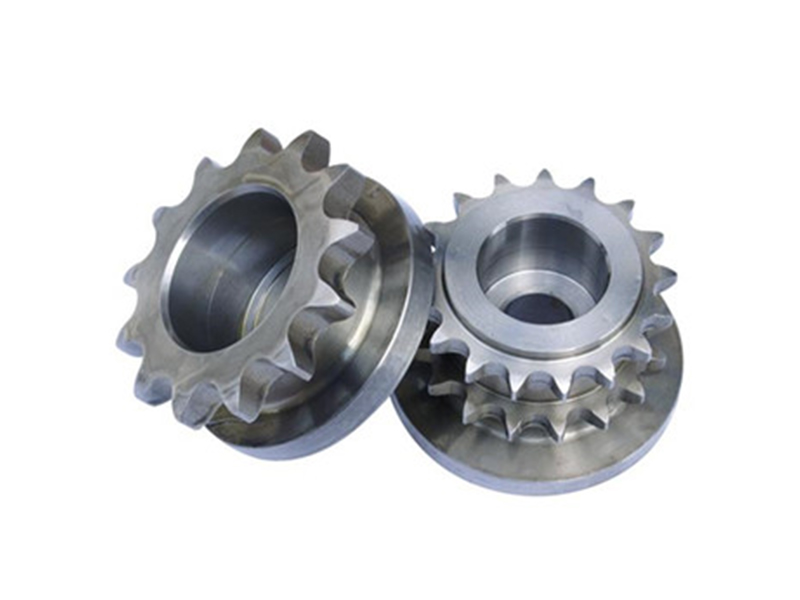
This product is the core driving component in powered roller conveyor systems. It is a functional module that integrates a steel sprocket with the shaft end of a conveyor roller in a high-strength, high-precision manner. Its core function is to efficiently and reliably convert the power transmitted by the drive chain into the rotational motion of the roller, thereby driving the conveyor belt or directly propelling materials.
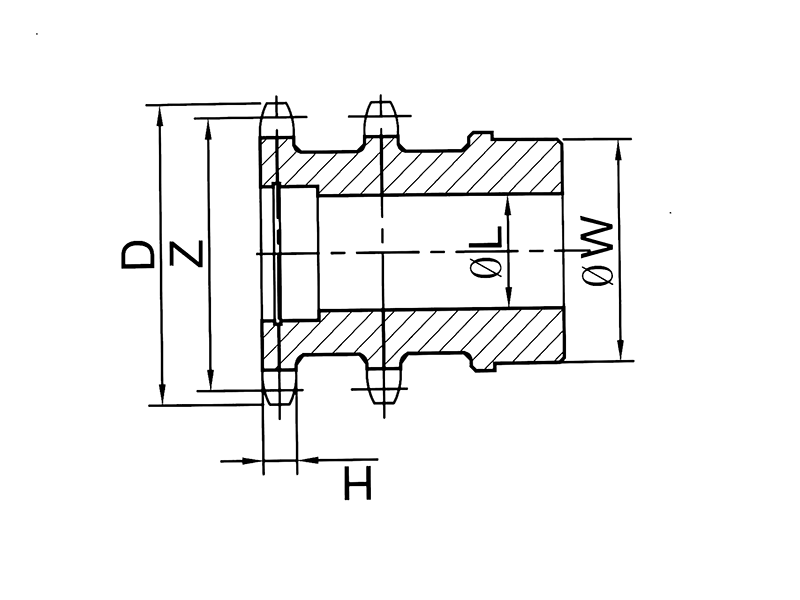
With the use of a steel sprocket and tube welding process, rollers can now transmit more torque and can transport pallets with heavy loads. A precision ball bearing unit can support more weight than a polymer bearing unit because it is tightly and robustly fastened by impact in a steel housing.
| tube out diameter | tube thickness | shaft diameter | sprocket model | material | surface treatment |
| Φ38 | 1.2/1.5/2.0 | Φ12/Φ15 | 06B/08B | #45 steel, SS304 | hardening, oxidation |
| Φ50 | 1.2/1.5/2.0 | Φ12/Φ15 | 06B/08B | #45 steel, SS304 | hardening, oxidation |
| Φ60 | 1.5/2.0/2.5/3.0 | Φ12/Φ15/Φ20 | 08B | #45 steel, SS304 | hardening, oxidation |
| Φ76 | 2.0/2.5/3.0/3.5 | Φ12/Φ15/Φ20/Φ25 | 08B/10A | #45 steel, SS304 | hardening, oxidation |
| Φ89 | 3.0/3.5/4.0 | Φ12/Φ15/Φ20/Φ25 | 10A | #45 steel, SS304 | hardening, oxidation |
Notes: single-row or double-row sprocket assembly is available.
This assembly is a standardized or customized connection unit specifically designed for industrial conveying applications. Its typical structure includes:
Steel Sprocket: The core characteristic component of the assembly. It is typically made from high-quality carbon steel or alloy steel (e.g., 45# steel, 40Cr) through forging and machining. The tooth profile is precisely calculated (e.g., conforming to ANSI or ISO standards) and undergoes heat treatment (quenching and tempering), giving the tooth surface high hardness (HRC 40-55) and excellent wear and impact resistance.
Roller Connection End: Depending on the design of the roller shaft end, the main connection methods include:
Key Connection: The most traditional and reliable method. A keyway is machined into the sprocket hub, and torque is transmitted via a parallel key or Woodruff key engaging with a corresponding keyway on the roller shaft. Set screws are often used for additional axial fixation.
Taper-Lock (Bushing) Connection: A more modern, keyless connection method. The sprocket hub has a tapered bore that matches a double-cone elastic bushing. Tightening high-strength bolts causes the bushing to expand radially, creating immense static friction between the sprocket hub and the roller shaft. This achieves a high-torque, high-concentricity, zero-backlash connection and can compensate for minor machining tolerances.
Flange Connection: For heavy-duty applications, the sprocket may be bolted directly onto a drive flange welded to the end face of the roller.
Integrated Design: In some designs, the sprocket is integrated with the bearing housing, sealing structure, or even a complete roller end cap, forming a more easily installable and maintainable "drive end assembly."
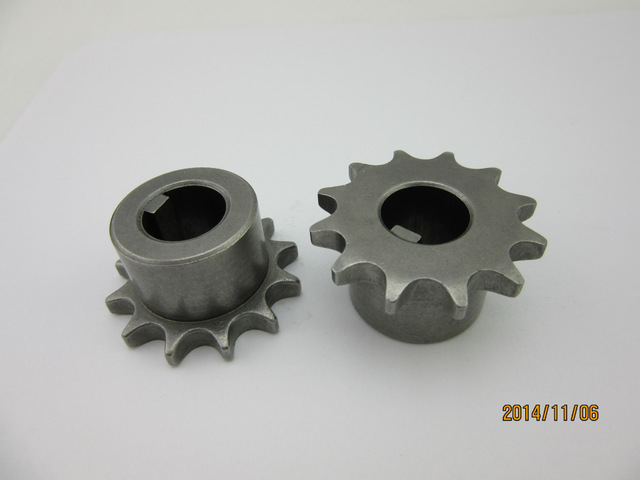
Efficient Power Transmission: The steel sprocket meshes tightly with the drive chain (e.g., roller chain), ensuring high transmission efficiency and minimal energy loss.
High Load Capacity and Reliability: The steel material and heat treatment process ensure the assembly can withstand the shock loads and continuous alternating loads caused by system start-stop cycles and load variations. Its reliability is far superior to that of plastic or cast iron sprockets.
Precise Synchronization: Precise tooth profile machining and robust connection methods guarantee synchronization among multiple rollers, which is crucial for preventing material misalignment and ensuring smooth conveyor line operation.
Strong Environmental Adaptability: The steel components usually feature anti-corrosion treatments (galvanizing, blackening, painting), enabling them to withstand common factory environmental factors like dust, humidity, and mild corrosive conditions.
Long Service Life and Easy Maintenance: Excellent wear resistance significantly extends the replacement cycle. The modular design allows for the replacement of just the sprocket itself when worn, without the need to replace the entire roller.
This assembly is a fundamental component in all conveying equipment utilizing chain drive and is widely used in:
Powered Roller Conveyors: For transporting pallets, containers, and heavy parcels.
Slat/Top Chain Conveyors: As the sprocket assembly on the drive shaft end.
Overhead Chain Conveyor Systems: As the drive sprocket assembly for the chain.
Agricultural and Construction Machinery Conveying Devices: Such as internal conveying mechanisms in harvesters and excavators.
Packaging and Sorting Lines: Sections requiring stable, reliable, and speed-adjustable drives.
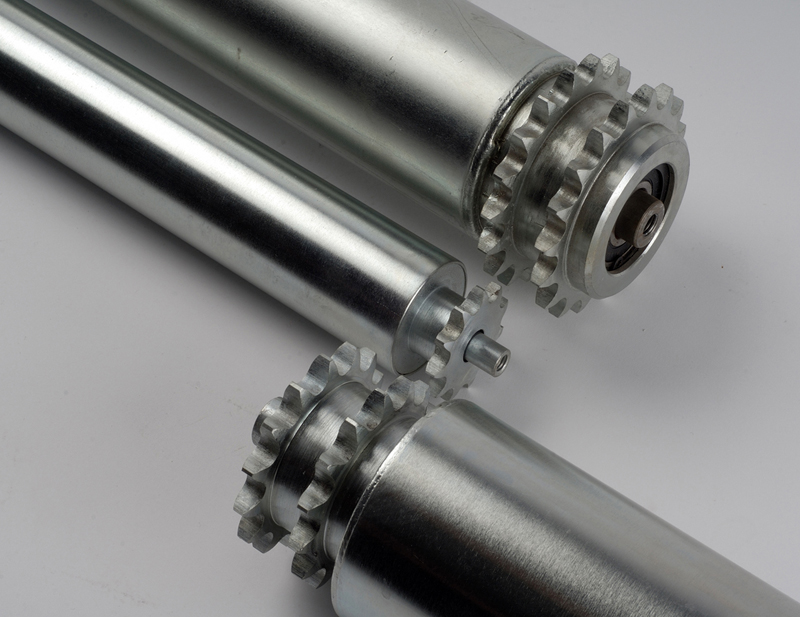
Reliable Power Transmission: Steel material and strengthening processes ensure absolute reliability in power transmission.
Strong Load-Bearing Capacity: Suitable for medium to heavy-duty continuous industrial operation.
Precise Synchronization: Ensures synchronized action of multiple drive points on the conveyor line.
Long-Lasting Durability: High wear-resistant design reduces lifecycle maintenance costs.
Flexible Compatibility: Can be flexibly selected and customized based on roller shaft diameter, chain size (e.g., 08B, 10A, 12A), and number of teeth.
When selecting, it must be matched with the conveyor roller and drive system. Key parameters include:
Sprocket Parameters: Chain Size (determines pitch), Number of Teeth (affects speed ratio and meshing smoothness), Model (single-strand/double-strand/heavy-duty).
Connection Parameters: Bore Diameter (must match roller shaft diameter), Keyway Dimensions or Bushing Specification.
Performance Parameters: Allowable Torque, Applicable Speed Range.
Installation Requirements: Ensure proper alignment between the sprocket and roller shaft. Tighten all fasteners (key, bushing bolts, set screws) to the specified torque. Ensure the sprocket teeth and drive chain are in the same plane to prevent "chain climbing" or abnormal wear.
In summary, the Conveyor Roller Steel Sprocket Assembly is the "power joint" of the industrial conveying field. It represents an engineered integration of a standard transmission sprocket with a roller shaft. With its robust, durable, and reliable characteristics, it is an indispensable key mechanical component that ensures the continuous and efficient operation of various production and logistics lines.


