
 |
RONWIN
This product is a highly engineered composite bearing assembly. Its core design concept is to combine the advantages of two different types of bearings (roller bearings and ball bearings) within a compact unit. It is designed to meet the demanding application scenarios that require a comprehensive combination of high radial load capacity, moderate axial load capacity, high rigidity, and precision rotation.
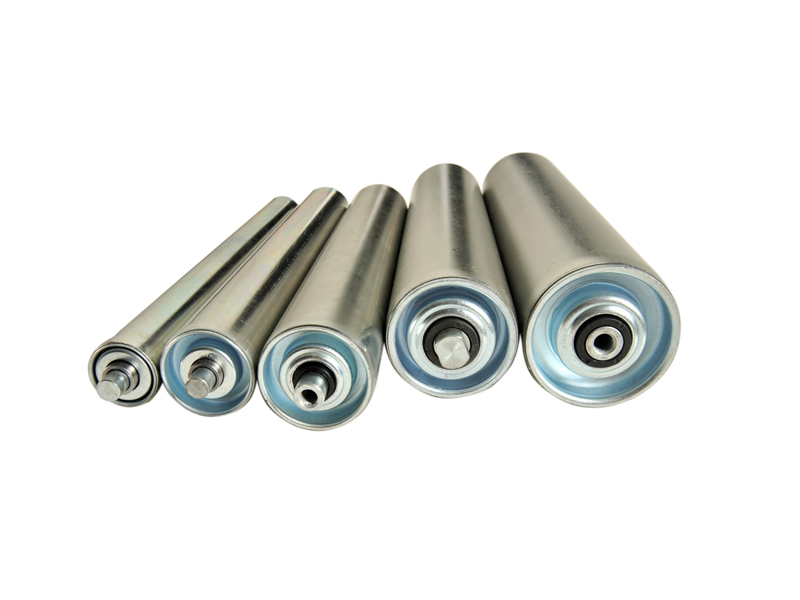
The specifications chart below details the wall thickness of the roller tube and the corresponding shaft.
| tube out diameter (mm) | tube wall thickness (mm) | shaft diameter (mm) | material |
| Φ25 | 1.0/1.2 | Φ8 | carbon steel, stainless steel |
| Φ32 | 1.0/1.2 | Φ8 | carbon steel, stainless steel |
| Φ38 | 1.2/1.5/2.0 | Φ12 | carbon steel, stainless steel |
| Φ42 | 1.2/1.5/2.0 | Φ12 | carbon steel, stainless steel |

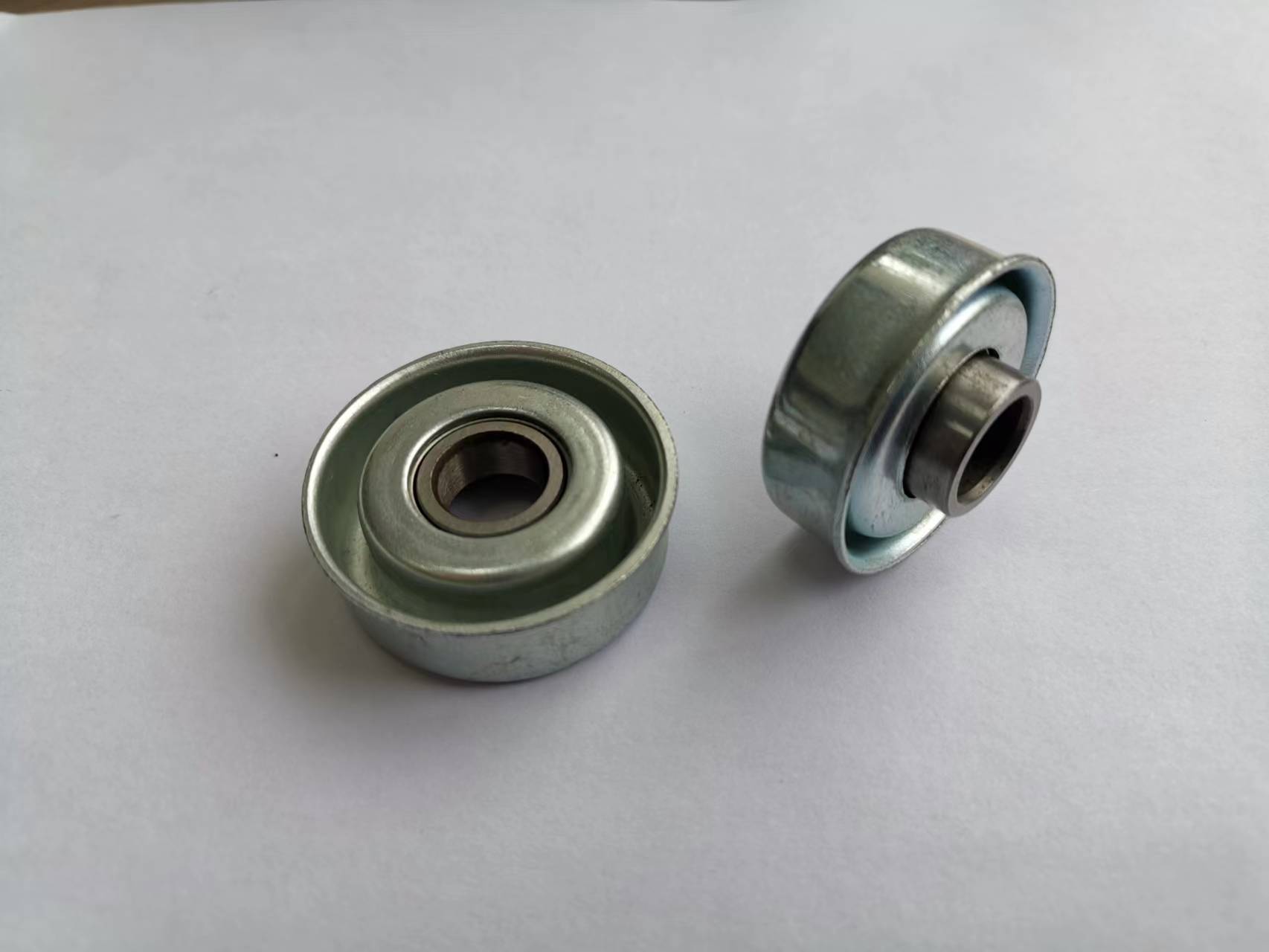
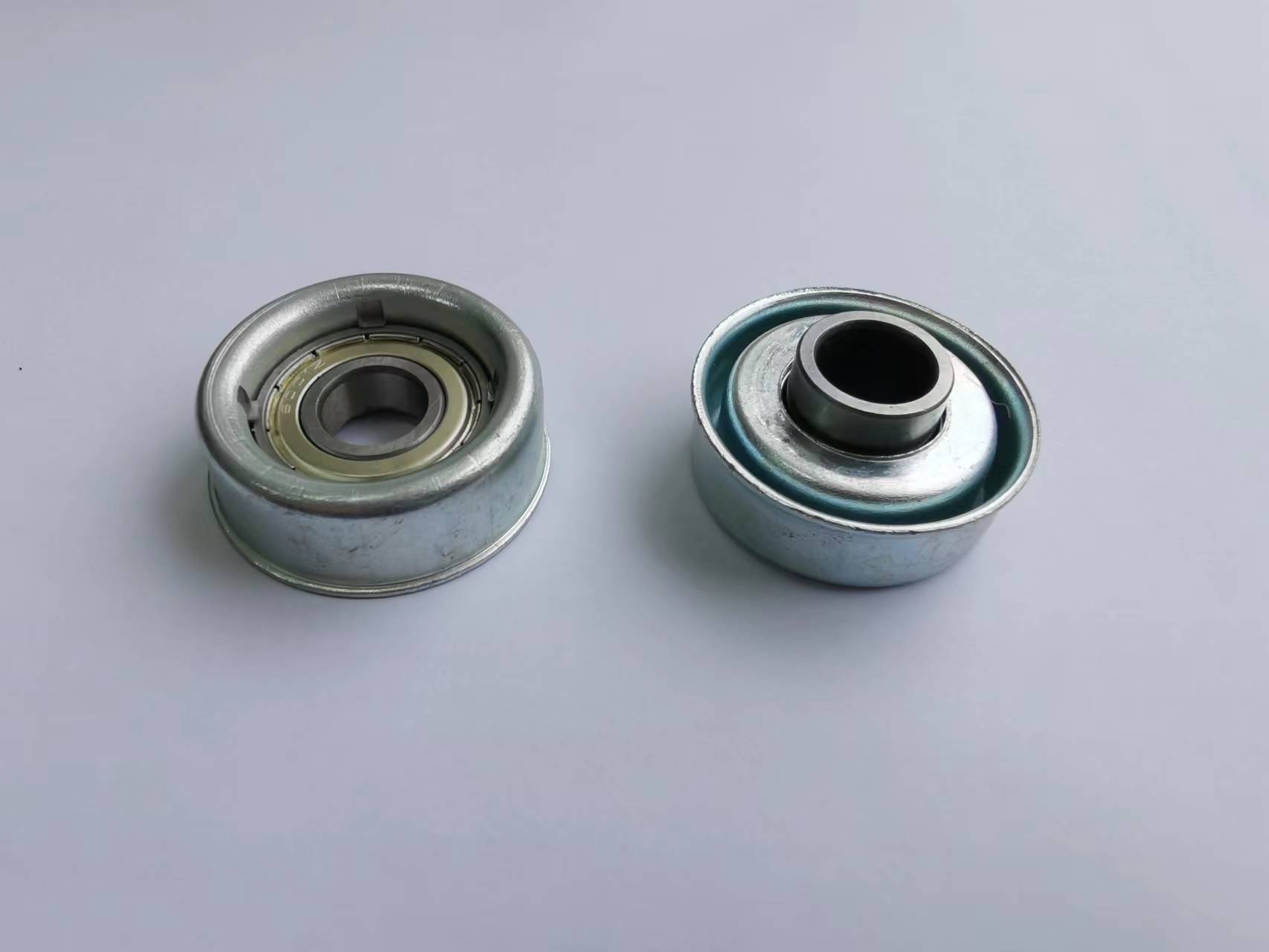
Steel rollers with diameters of 25m, 32mm, 38mm, and 42 mm can use this kind of steel bearing assembly. Stamp bearing housing, end cap, and precision ball bearing complete the bearing assembly.
This "assembly" is not a standardized single bearing but an integrated functional module. Its typical structure generally consists of:
Outer Layer / Main Body: A cylindrical roller bearing unit. It comprises hardened steel outer and inner rings with cylindrical rollers between them. This is the primary component for handling radial (vertical direction) loads. The line-contact design of the rollers provides extremely high radial rigidity and load-carrying capacity.
Inner Layer / Integrated Section: A precision deep groove ball bearing unit. Typically, the inner ring of the roller bearing is specially designed to integrate a precision-grade deep groove ball bearing internally or at its end face. This ball bearing is responsible for handling axial (horizontal direction) thrust loads and part of the remaining radial load, ensuring smooth rotation and low starting torque for the entire assembly.
Integrated Housing / Mount: The entire bearing assembly is usually encapsulated within a robust steel housing (such as a square flange block, round flange block, or pillow block). This housing provides a precise mounting reference, pre-alignment functionality, and facilitates easy overall installation and fixation onto the machine frame.
Rolling Elements:
Rollers: Made of high-carbon chromium bearing steel (e.g., GCr15), precision-ground to extremely tight dimensional tolerances and high surface finish, ensuring even load distribution.
Balls: Similarly made of high-precision bearing steel balls, typically meeting ABEC-3/5/7 or higher grades, guaranteeing high-speed operation, low friction, and precise running paths.
Rings and Cage:
The inner and outer rings are made of bearing steel and undergo heat treatment (quenching and tempering) to achieve high hardness and wear resistance.
The cage (separating the rolling elements) may be made of stamped steel or high-strength engineering plastics (e.g., PEEK, nylon) to guide the rolling elements at high speeds and reduce friction.
Seals: The assembly is typically equipped with efficient multiple seals (such as contact rubber seals, labyrinth seals) to prevent ingress of external contaminants (dust, debris, liquids) and retain the internal lubricating grease, extending service life.
Exceptionally High Radial Load Capacity: The cylindrical roller bearing design enables it to withstand very heavy radial loads, far surpassing the capability of a single deep groove ball bearing.
Combined Load Capacity: It can handle significant axial thrust from both directions via the integrated precision ball bearing while simultaneously withstanding massive radial loads. This offers a more comprehensive and compact solution compared to using only roller bearings (typically weak in axial capacity) or paired angular contact ball bearings (relatively weaker in radial capacity).
High Rigidity and Precision: The roller bearing provides excellent rigidity, effectively resisting bending deformation caused by heavy loads. The integrated high-precision ball bearing ensures the entire rotating shaft system has minimal runout and operational wobble.
Pre-adjusted and Easy Installation: As a component that is pre-adjusted, pre-lubricated, and pre-sealed before leaving the factory, users can install it without complex alignment or adjustments. It functions as a "plug-and-play" module, greatly simplifying the assembly process and improving the overall machine assembly accuracy and reliability.
This bearing assembly is specifically designed for equipment requiring heavy loads, precision, and compact structure. Typical applications include:
High-Precision Machine Tools: Spindle rear support in CNC lathes and machining centers, fixed-end support for heavy-duty ball screws.
Industrial Robots: Robot joint locations, especially key rotating axes like large arms and bases that need to simultaneously withstand bending moments (radial forces) and thrust forces.
Professional Drive Systems: Output shafts of large gearboxes, roller bearing housings in printing machinery, guide rollers in rolling mill equipment.
Precision Rotary Devices: Radar antennas, rotating components of medical CT scanners, turntables for large optical instruments.
Functional Integration: Solves the support requirements for both heavy radial loads and bidirectional axial loads within a single unit.
Space Saving: The integrated assembly has a more compact structure compared to solutions using two separate bearings, saving valuable internal space in the equipment.
Performance Enhancement: High rigidity and precision directly improve the machining accuracy, motion stability, and dynamic response of the host equipment.
Simplified Design and Maintenance: Reduces the number of parts, simplifies mechanical design, and often features long-life lubrication, extending maintenance intervals.
Key factors to focus on during selection:
Dynamic/Static Load Ratings: Radial and axial load capacities.
Precision Grade: The precision of the ball bearing (e.g., ABEC grade) and the rotational accuracy of the entire assembly.
Permissible Speed: The maximum speed limit considering the combined characteristics of the roller and ball bearings.
Mounting Interface: Housing type (flange, block, etc.) and dimensions.
Lubrication and Seals: Whether the type of pre-filled grease and the seal rating (IP rating) meet the operational condition requirements.
In summary, the Precision Ball Bearing-Integrated Roller Steel Bearing Assembly is an advanced functional component used in high-end, heavy-duty, and precision machinery fields. Through its innovative "roller + ball" composite design, it perfectly combines load-carrying capacity, rigidity, and rotational precision. It is one of the core foundational components enabling reliable and precise motion in modern high-performance equipment.


