
 |
The Conveyor Roller Polymer Sprocket Assembly is a versatile, integrated drive component. Its core is a roller made of polymer (engineering plastic). The outer surface of this roller serves as the load-bearing surface for conveyed items, while one or both of its ends integrate the tooth profile of a sprocket. The interior typically contains a pre-installed bearing (such as a ball bearing or plain bearing) for mounting onto a drive shaft.
Simply put, it functions both as a conveyor roller and a sprocket. Multiple such assemblies can be synchronously driven via a common drive shaft and chain, thereby forming a complete conveying surface.
This unique design and material choice provide it with a series of significant advantages:
Function Integration: Combines the roller, sprocket, and bearing into a single unit, eliminating the need for separate sprockets, sleeves, keys, and fasteners required in traditional designs.
Space Saving: Compact structure, especially suitable for conveyor designs where space is limited.
Easy Installation: Typically, it only needs to be pressed or pushed onto the drive shaft and secured with a circlip or end cap, greatly reducing assembly time and cost.
Lightweight: Weight is significantly lower than metal components, reducing the inertia of the drive system, saving energy, and allowing for quicker starts and stops.
Self-Lubricating and Low Noise: Polymer materials have natural lubricity and run quietly, making them ideal for indoor environments with strict noise requirements (e.g., food, electronics, packaging industries).
Corrosion Resistance: Excellent resistance to water, steam, detergents, weak acids, and alkalis; completely rust-proof, making it ideal for damp and wash-down environments (e.g., food processing, washing, cold chain logistics).
Non-Damaging to Goods: The polymer surface is softer than metal and will not scratch or abrade sensitive conveyed item surfaces (e.g., wood products, plastics, cartons, painted items).
Clean and Hygienic: Does not harbor bacteria, is easy to clean, and complies with hygiene standards like FDA and USDA for the food and pharmaceutical industries.
Precise Synchronization: All roller assemblies driven by the chain rotate synchronously, ensuring consistent line speed and providing smooth material flow.
Low Maintenance: Requires no lubrication or minimal maintenance, reducing maintenance costs and the risk of product contamination from lubricants.
Although the individual component cost may be higher than that of a standard metal roller, its Total Cost of Ownership (TCO) is often more advantageous due to reduced part count, simplified installation processes, and lower maintenance requirements.
| tube out diameter | tube thickness | shaft diameter | sprocket model | material |
| Φ50 | 1.2/1.5 | Φ12/hex 11 | 08B11T/08B14T | nylon + PP |
| Φ60 | 1.2/1.5 | Φ12/hex 11 | 08B11T/08B14T | nylon + PP |
Notes: Steel sprokcets are also customizable, #45 steel and stainless steel material are avaiable.


This assembly is widely used in conveying systems that require quiet, clean, light-to-medium duty, and synchronously driven operation.
Packaging and Bottling Industry
Applications: Conveyor lines for bottles, cans, cartons, packaging bags.
Reasons: Quiet, hygienic, does not damage packaging surfaces.
Food and Beverage Processing
Applications: Processing lines for biscuits, confectionery, meat, dairy products.
Reasons: Complies with hygiene standards, corrosion-resistant, easy to wash down.
Logistics Sorting and Conveying
Applications: Parcel sorters, roller conveyors, lifters.
Reasons: Good synchronization, stable operation, low noise.
Electronic Assembly and Manufacturing
Applications: Conveyance of PCBs, electronic components.
Reasons: Anti-static (certain models), does not scratch precision components.
Wood Processing and Furniture Manufacturing
Applications: Conveyance of wood panels, boards, furniture parts.
Reasons: Does not leave marks or scratches on wood surfaces.
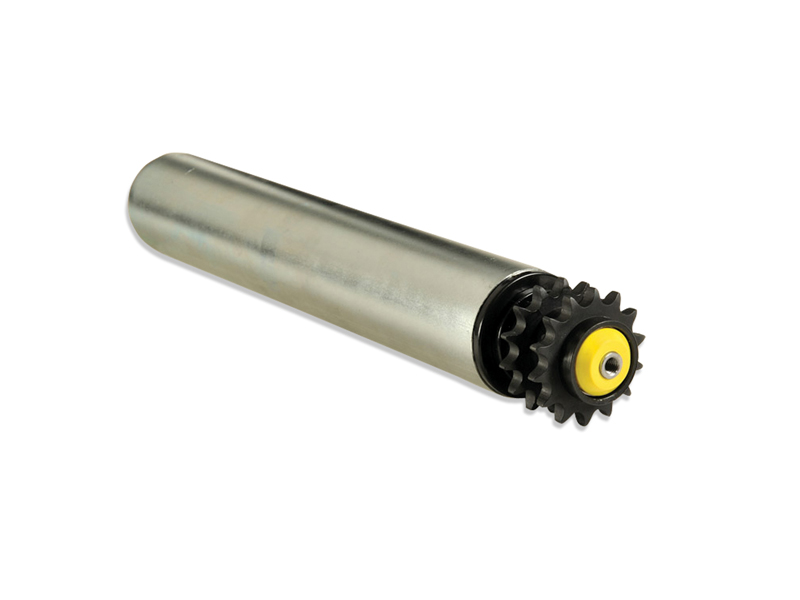


The Conveyor Roller Polymer Sprocket Assembly represents a significant trend in conveyor technology towards modularization, lightweight design, low maintenance, and user-friendliness. Through innovative material science and integrated design, it perfectly addresses pain points related to hygiene, noise, corrosion, and maintenance across numerous industries. When selecting it, suitability must be confirmed based on specific load, speed, temperature, and environmental conditions. However, within its design parameters, it is an efficient, economical, and reliable excellent solution.


