
 |
| Material: | |
|---|---|
| Mounting Method: | |
| Surface Treatment: | |
| Shaft Type: | |
| Diameter: | |
| Quantity: | |
R2280
RONWIN
HS Code: 8431390000
Precise positioning, used with motor drive roller to meet the application requirements of the transfer section
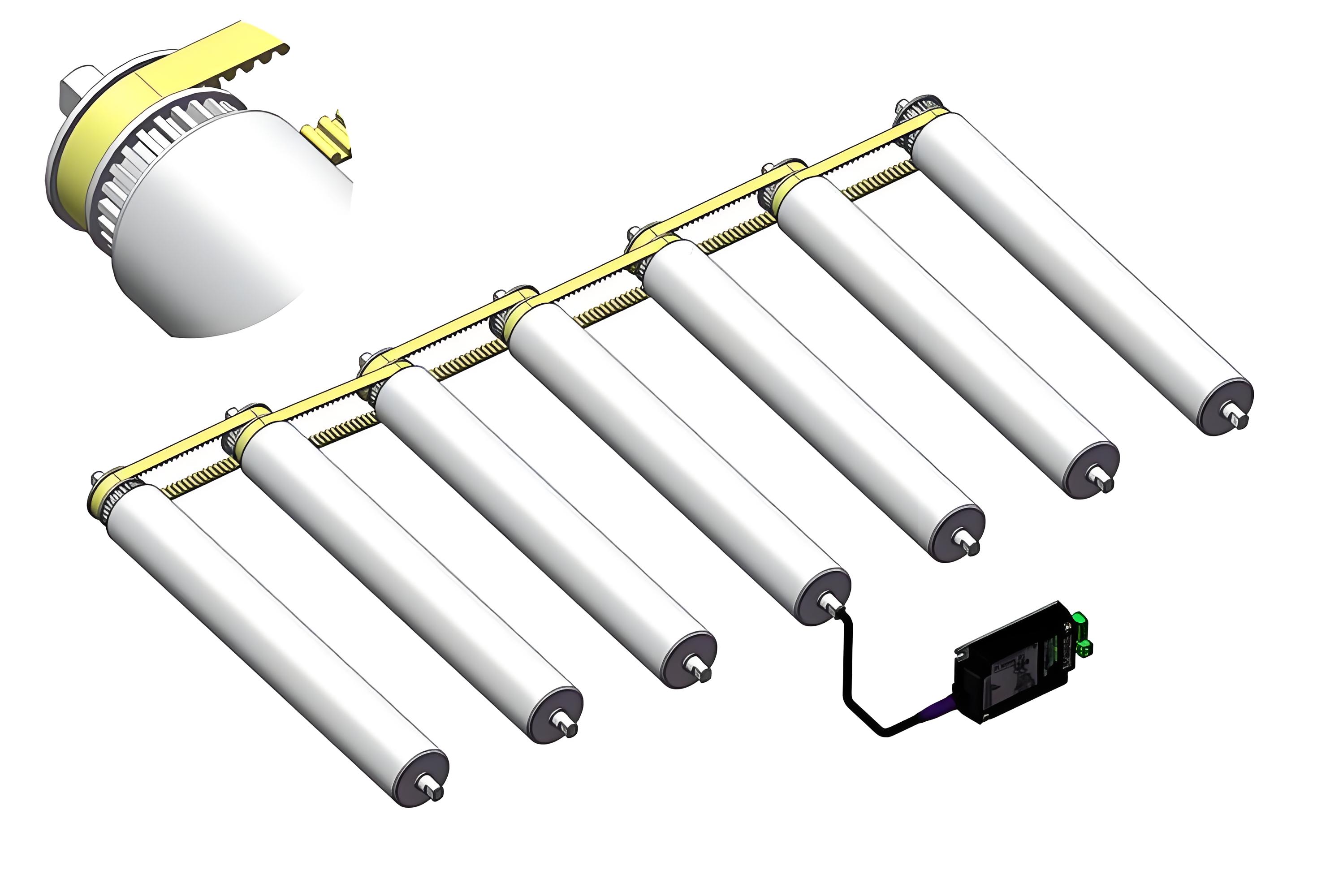 A timing belt-driven steel conveyor roller is a high-performance, high-precision power transmission component primarily used to build modular conveying systems with high synchronization requirements. It uses a timing belt (synchronous belt) to precisely transfer power from the drive motor to one or multiple rollers, enabling smooth and synchronized movement of items. Its core features are zero slippage, accurate positioning, and high transmission efficiency.
General technical data | |
Max. load capacity | 100 KGS |
Max. conveying speed | 120 m/min |
Temperature range | −5 to +40 °C |
Material | |
Tube | Carbon steel, stainless steel |
Shaft | Antirust oil coated steel, Zinc-plated steel, Stainless steel |
Bearing housing | Polyamide, black |
End cap | Polypropylene, yellow/grey |
Bearing | Precision ball bearing |
Drive Element | |
Toothed pulley | Polyamide, black |
Design versions | |
Surface treatment | Zinc-plated, chrome-plated |
Tube sleeves | PP sleeve, PU sleeve |
Lagging | Rubber, PU |

Tube Material | D × T | Shaft | E | L |
Steel, stainless steel | 50×1.5 | Φ12/Φ15 | E=W+35.5 | L=W+36.5 |
The center distance of the timing belt arrangement is strictly limited (recommended tolerance +0.5/0 mm). The common pitch and the toothed belt type are shown in the following table.

Center distance (mm) | Type of toothed belt | Teeth number of toothed belt |
60 | 10-T5-250 | 50 |
75 | 10-T5-280 | 56 |
85 | 10-T5-300 | 60 |
100 | 10-T5-330 | 66 |
105 | 10-T5-340 | 68 |
135 | 10-T5-400 | 80 |
145 | 10-T5-420 | 84 |
160 | 10-T5-450 | 90 |
Material: Typically made from high-quality carbon steel or stainless steel. The surface can be treated with zinc plating, chrome plating, PU coating or PVC coating to suit different working environments (e.g., rust-proof, corrosion-resistant, wear-resistant, food-grade).
Structure: The roller body is a hollow steel tube, with end caps and shaft ends fixed at both ends via press-fitting.
Installed on one or both shaft ends of the roller. Its outer edge with tooth grooves that perfectly mesh with the timing belt. This is the key component for power input.
Typically uses deep groove ball bearings or needle roller bearings, built into the end caps, ensuring flexible rotation, low resistance, and long service life.
A drive motor (e.g., servo motor, stepper motor, or standard motor with a reducer) has a drive timing pulley on its output shaft.
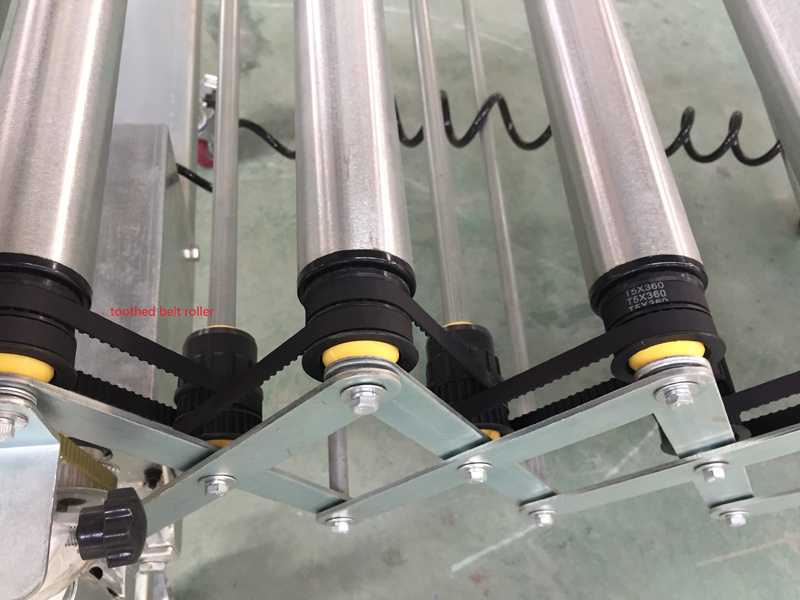
One or more timing belts are routed around the drive pulley and the driven pulleys on multiple conveyor rollers.
When the motor starts, the drive pulley, via the meshing action with the timing belt's tooth grooves, drives all connected conveyor rollers to rotate synchronously, in the same direction, and at the same speed, achieving linear transportation of objects.
Precise Synchronization, Zero Slippage: Compared to friction-driven rollers, timing belt transmission relies entirely on tooth meshing, fundamentally eliminating slippage and ensuring consistent speed across all driven rollers. Ideal for applications requiring precise positioning and strict synchronization.
High Load Capacity: The steel roller itself has high mechanical strength and rigidity, enabling it to withstand heavy loads.
High Transmission Efficiency: Compact structure with minimal transmission loss, leading to high energy utilization.
Compact Design, Flexible Layout: Multiple rollers can be driven simultaneously by a single belt, simplifying the system structure and saving installation space. The drive motor can be mounted on the side, facilitating maintenance and adjustments.
Low Noise, Low Maintenance: Compared to chain drives, timing belt drives operate more smoothly and quietly, and require no lubrication, reducing maintenance costs and contamination risks.
Wide Speed Range: Capable of adapting to various conveying speeds, from low to high.
This type of roller is particularly suitable for automation fields with high demands for conveying synchronization and stability:
Logistics Sorting Systems: In cross-belt sorters and sliding shoe sorters, ensuring accurate movement and positioning of each parcel unit.
Assembly & Production Lines: In automotive, electronics, and appliance assembly lines, achieving precise positioning stops and synchronized transfer of pallets or products.
Lifting & Transfer Equipment: Used in lifters, turntables, and other equipment requiring precise position control.
Packaging Machinery: On packaging lines, enabling intermittent or continuous synchronized conveying of cartons.
Warehouse Automation: Used in the inbound/outbound conveyor lines of automated storage and retrieval systems (ASRS).
Motorised Flexible Expandable Roller Conveyor Used in Express Station and Warehouse
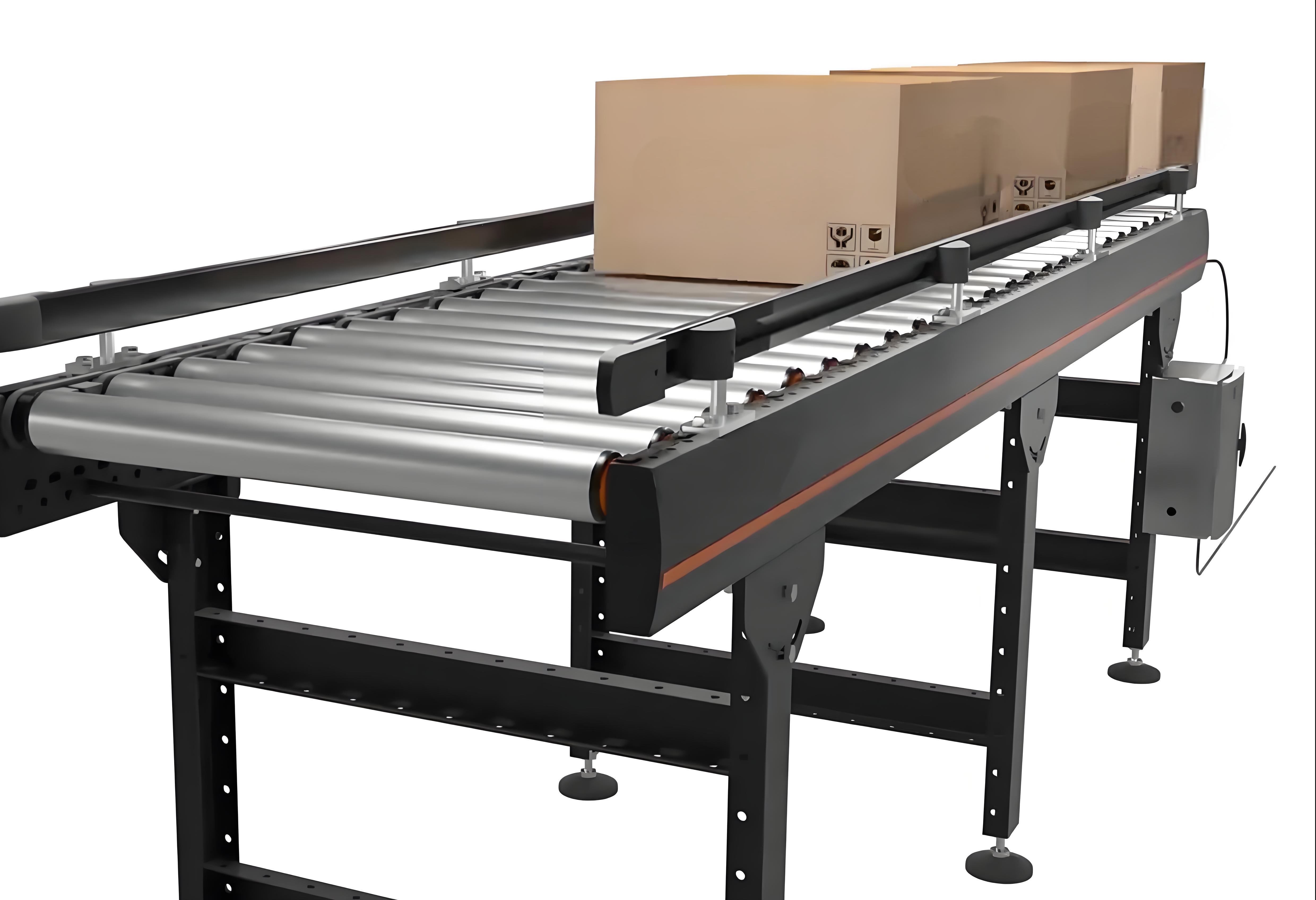
Timing Belt Driven RollerConveyor for Carton Transport
The following parameters must be considered when selecting this product:
Roller Diameter: e.g., φ25mm, φ32mm, φ38mm, φ50mm, etc.
Roller Length: The effective width of the conveying surface.
Shaft Diameter & Mounting Type: e.g., φ12mm, φ15mm, etc., and the corresponding bearing block type.
Timing Pulley Specification: Must match the selected timing belt model (e.g., HTD 5M, 8M; T5, T10; AT5, AT10, etc.) and the number of teeth.
Roller Material & Surface Treatment: Selected based on the environment (standard, humid, corrosive, food-grade).
Load Capacity: The maximum load a single roller can bear.
Center Distance: The installation distance between rollers, which determines the belt length and system layout.
Advantages: Quieter, cleaner, no lubrication required, higher speeds.
Disadvantages: Load capacity and overload protection are generally inferior to chain drives.
Advantages: No slippage, excellent synchronization, higher transmission efficiency, lower tensioning requirements.
Disadvantages: Relatively higher cost, more stringent requirements for alignment during installation.
The timing belt-driven steel conveyor roller is an ideal solution for achieving precise, efficient, and stable transportation in modern automated conveying systems. It perfectly combines the robustness and durability of steel rollers with the precise synchronization of timing belt transmission, and is widely used in advanced manufacturing and logistics fields where material flow must be strictly controlled.


