Views: 0 Author: Site Editor Publish Time: 2026-07-14 Origin: Site

Moving 2,000+ lb pallets across expansive warehouse or manufacturing footprints creates severe operational bottlenecks and safety hazards when relying solely on manual labor and forklift fleets. Facilities struggle to balance high-throughput demands with load stability, equipment durability, and strict safety standards. Premature equipment failure often stems from under-specifying system components—particularly failing to match the heavy duty conveyor roller specifications to the actual load profile.
Evaluating and selecting the correct heavy-duty pallet handling conveyor system requires moving beyond basic throughput calculations. You must analyze component-level engineering, structural frame design, facility constraints, and downstream automation integration. A robust system ensures continuous material flow while mitigating the risks associated with heavy load transport. We focus on mechanical realities, floor-level integration, and the exact specifications required to keep industrial lines moving without catastrophic downtime.
System architecture selection (roller vs. chain) must be dictated by pallet material (wood, plastic, metal), bottom-surface integrity, and load distribution.
The specification of the heavy duty conveyor roller—including wall thickness, bearing protection, and drive mechanism—determines system longevity and preventative maintenance intervals.
Zero-pressure accumulation zones are critical for preventing product damage and staging loads without continuous energy expenditure or line pressure.
You cannot design a functional material handling system without first understanding exactly what you are moving. Documenting maximum and minimum weight, footprint dimensions, center of gravity, and load stability during acceleration and deceleration forms the foundation of system design. Engineers must evaluate how dynamic forces interact with the conveying surface. A top-heavy load requires smoother acceleration profiles and tighter roller spacing to prevent tipping. Understanding the precise load profile prevents the over-engineering of straight transport sections while ensuring critical transition zones have the necessary structural support.
Assessing the impact of uneven bottom surfaces, missing boards, custom steel skids, and the friction coefficients of plastic versus wooden pallets is essential. Standard wooden pallets often suffer from broken bottom boards, which can catch on improperly spaced rollers. Plastic pallets, while durable, present lower friction coefficients that can cause slippage on incline sections or during rapid deceleration. Custom steel skids concentrate massive point loads, demanding a highly durable conveying surface to prevent localized deformation.
| Pallet/Skid Type | Common Issues | Conveyor Design Requirement |
|---|---|---|
| Standard GMA Wood | Broken bottom boards, splinters, nails | Tighter roller spacing, debris catch pans |
| Molded Plastic | Low friction, deflection under heavy load | High-grip roller coatings, continuous support |
| Custom Steel Skids | Extreme point loads, metal-on-metal wear | Heavy-wall rollers, structural channel frames |
| Cardboard Slip Sheets | Tearing, moisture degradation | Belt-over-roller or ultra-tight roller pitch |
Calculating required pallets-per-hour (PPH) during peak operational surges versus average daily volume determines motor duty cycles. A system designed only for average throughput will overheat and fail during seasonal peaks. High-throughput environments require continuous-duty motors and robust drive mechanisms capable of sustaining rapid start-stop cycles without thermal degradation. Cycle time analysis also dictates the necessary speed of transfers and turntables to prevent bottlenecks at directional changes.
Identifying facility-specific challenges directly influences material selection. Cold storage environments require specialized lubricants that do not congeal at sub-zero temperatures. Washdown areas necessitate stainless steel components and hermetically sealed bearings to prevent corrosion. Facilities processing aggregates or heavy recycling must account for abrasive particulate matter that can rapidly degrade unprotected mechanical components.
Audit the physical dimensions and weight variations of all loads handled in the facility.
Measure the available floor space, noting column locations, expansion joints, and ceiling heights.
Determine the required throughput during the absolute peak operating hour.
Identify environmental hazards like moisture, dust, or extreme temperatures.
Map the exact routing path, including necessary 90-degree or 180-degree directional changes.
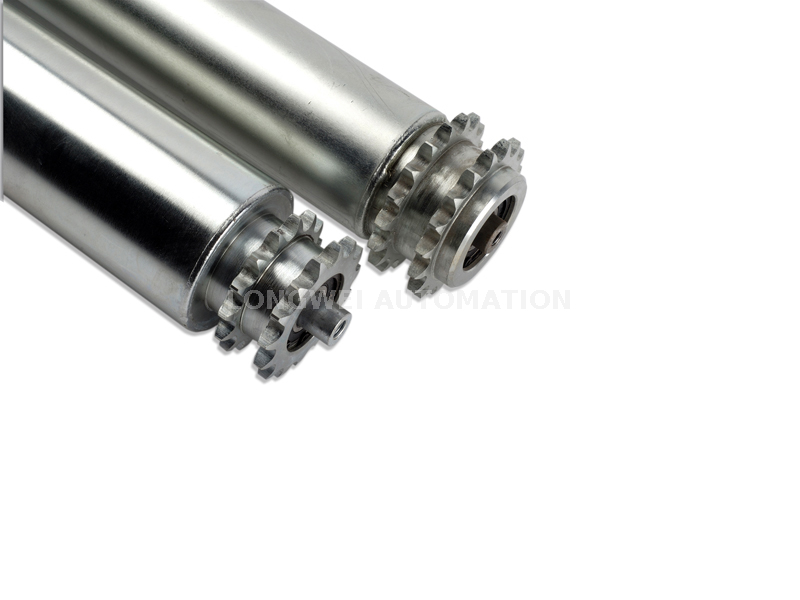
Utilizing a continuous chain to drive sprockets welded directly to individual rollers provides positive drive and high torque for heavy loads. This mechanism ensures that power is consistently transmitted across the entire conveying zone. CDLR systems excel at transporting standard, stable pallets between receiving, storage, and packing stations. They handle massive weights effectively because the drive force is distributed mechanically across multiple contact points. However, they are less effective for pallets with irregular or severely damaged bottom surfaces, which can cause hang-ups, uneven tracking, or localized damage to the conveying surface.
Utilizing two or more strands of heavy-duty chain to directly support and move the load offers an alternative to roller-based transport. This architecture is ideal for handling items with uneven bottom surfaces, custom manufacturing skids, bulk industrial containers, or loads where a Heavy Duty Conveyor Roller system would experience severe point-load failures. The primary limitations include higher friction, potentially higher wear on the pallet bottom, and more complex transition points when interfacing with other equipment.
Dividing the conveyor into distinct physical zones equipped with sensors and clutch/brake mechanisms ensures pallets never touch, eliminating line pressure. When a downstream zone is occupied, the upstream zone automatically halts. ZPA systems are critical for staging areas, feeding automated machinery, and buffering between processes with different cycle times. By removing line pressure, these systems protect fragile loads from crushing forces and reduce the continuous energy draw associated with running empty conveyor sections.
Pneumatic or electric pop-up chain transfers and motorized turntables facilitate complex routing within constrained layouts. These modules change product direction by 90 or 180 degrees while maintaining pallet orientation. Pop-up transfers lift the load off the main conveying surface and move it laterally onto an intersecting line. Turntables rotate the entire load, which is necessary when downstream processes require a specific pallet orientation for robotic unloading or automated storage integration.
Correlating tube diameter and schedule or gauge thickness to the maximum static and dynamic load requirements prevents deflection and premature fatigue. A standard 2.5-inch diameter roller may suffice for lighter pallets, but industrial applications often require 3.5-inch or larger diameters with heavy wall construction. Deflection under load causes uneven wear on bearings and drive chains. Selecting the appropriate thickness ensures the structural integrity of the conveying surface remains intact over years of continuous operation.
Specifying precision ABEC-1 or ABEC-3 bearings versus commercial-grade options directly impacts rolling resistance and acoustic emissions. Precision bearings handle higher speeds and heavier loads with less friction. Selecting labyrinth or contact seals protects the internal components from abrasive dust, moisture, and washdown chemicals. In environments with high particulate contamination, unsealed bearings will rapidly seize, causing the drive mechanism to fail and halting production.
| Component | Standard Specification | Heavy-Duty Specification |
|---|---|---|
| Tube Diameter | 1.9" to 2.5" | 2.5" to 3.5"+ |
| Wall Thickness | 16 Gauge to 11 Gauge | 7 Gauge to 0.300" Wall |
| Axle Size | 7/16" Hex | 11/16" to 1" Hex |
| Bearing Type | Commercial Unsealed | ABEC Precision Sealed |
Selecting hex axle dimensions, such as 11/16-inch or larger, and appropriate retention options ensures proper load distribution and prevents frame hole wear. Spring-loaded axles allow for easier maintenance and replacement, while cotter pin retention provides maximum security against axial movement under heavy dynamic loads. If the axle is undersized for the load, it will wallow out the mounting holes in the side frame, requiring expensive structural repairs.
Comparing traditional sprocket-to-sprocket chain-driven rollers against heavy-duty Motorized Drive Rollers (MDR) reveals distinct operational advantages. Traditional chain drives offer immense torque for the heaviest loads but require regular lubrication and tensioning. MDR systems integrate the motor directly inside the roller tube, enabling precise zoned control, reducing mechanical complexity, and eliminating exposed drive chains. MDR technology significantly lowers ambient noise levels and simplifies the creation of zero-pressure accumulation zones.
Integrating reinforced, thick-walled rollers or specialized impact dampening assemblies at forklift loading and drop-off stations protects the system from shock damage. Forklift operators inevitably drop heavy pallets onto the conveying surface. Without impact dampening, these sudden dynamic loads will crush standard rollers and shatter bearings. Heavy-duty impact zones absorb and distribute these forces, preserving the integrity of the primary transport sections.
Evaluating the difference between roll-formed steel and structural channel steel frames is critical for supporting heavy loads under continuous industrial capacities. Roll-formed frames offer a lighter, modular approach suitable for moderate weights. Structural channel steel provides the massive rigidity required to withstand the dynamic shear forces generated by moving multi-ton loads. A compromised frame will lead to misalignment, increased wear on drive components, and eventual system failure.
Assessing the ease of adding accumulation zones, curves, or transfers as facility throughput demands grow prevents future operational bottlenecks. Modular systems allow facilities to reconfigure layouts without replacing entire conveyor lines. Standardized bolt-hole patterns and plug-and-play control architecture facilitate rapid expansion. A highly scalable system adapts to changing business needs, ensuring the initial capital investment continues to deliver value as production volumes increase.
Evaluating the reduction in forklift traffic, the necessity of physical guarding, step-overs, and the integration of emergency stop pull cords addresses critical safety mandates. Automated pallet transport drastically reduces the interaction between pedestrians and heavy machinery. Physical guarding prevents personnel from accessing pinch points and drive mechanisms. Strategically placed step-overs allow safe navigation across long conveyor lines, while continuous e-stop cords provide immediate shutdown capabilities along the entire transport path.
Reviewing the requirements for PLC integration, routing logic, barcode or RFID scanning, and sensor placement enables real-time tracking and automated decision-making. The physical conveyor must communicate seamlessly with the Warehouse Execution System (WES) or Warehouse Control System (WCS). Sensors detect pallet presence, triggering localized motor activation and updating inventory tracking databases. Robust control logic prevents collisions at merge points and optimizes routing to balance workloads across multiple downstream stations.
Ensuring precise alignment tolerances and electronic handshakes at interface zones is mandatory where conveyor systems hand off loads to Automated Storage and Retrieval Systems or Autonomous Mobile Robots. These automated vehicles require pallets to be positioned within millimeter tolerances for successful retrieval. The conveyor control system must execute precise electronic handshakes, confirming load readiness and verifying the receiving equipment is in the correct position before initiating the transfer.
Analyzing the power consumption of continuous AC motors versus run-on-demand 24V/48V DC systems highlights significant operational differences. Continuous AC systems draw power constantly, even when no product is being transported. Run-on-demand DC systems, often utilizing motorized drive rollers, only activate the specific zones required to move a pallet. This localized activation drastically reduces overall energy consumption and decreases the thermal load placed on the facility's electrical infrastructure.
Weighing the lead times and spare parts availability of standard modular systems against the operational benefits of custom-engineered solutions dictates the procurement strategy. Standardized systems offer rapid deployment and easily sourced replacement parts. Custom solutions address unique facility constraints or highly specialized load profiles but require longer engineering lead times and dedicated spare parts inventory. Facilities must determine if their operational requirements truly necessitate the complexity of a custom build.
Phasing installation schedules to maintain partial facility operations minimizes disruption to active shipping and receiving lanes. Completely shutting down a distribution center for equipment installation is rarely feasible. Project managers must segment the deployment, installing and commissioning individual zones during off-peak hours or scheduled maintenance windows. Clear communication between the installation crew and facility operations ensures that temporary material flow paths remain safe and efficient.
Auditing concrete slab thickness, leveling requirements, and anchoring protocols is necessary to handle the dynamic shear forces of heavy load conveying. Uneven floors cause structural stress and misalignment of drive chains. The concrete slab must possess sufficient depth and compressive strength to secure heavy-duty wedge anchors. Proper leveling across expansive floor plans ensures pallets track straight and prevents localized overloading on specific support legs.
Establishing protocols for inspecting chain tension, lubricating bearings, checking sprocket wear, and identifying premature wear on a Heavy Duty Conveyor Roller prevents catastrophic line failure. Maintenance personnel must understand the specific lubrication requirements for precision bearings and the correct tensioning procedures for continuous drive chains. Regular acoustic and visual inspections can identify failing components before they cause collateral damage to the structural frame or adjacent rollers.
Verify concrete slab depth and compressive strength before drilling anchor holes.
Use laser leveling tools to ensure the entire conveyor line is perfectly horizontal.
Torque all wedge anchors to the manufacturer's exact specifications.
Test all emergency stop pull cords and physical guarding before applying power.
Run empty pallets through the system to verify tracking and sensor alignment.
Run fully loaded pallets to test motor torque and accumulation zone logic.
Selecting the right Heavy Duty Pallet Conveyor System is essential for achieving reliable material handling, improving operational efficiency, and reducing long-term maintenance costs. By carefully evaluating load characteristics, conveyor architecture, heavy duty conveyor roller specifications, and automation requirements, businesses can build a conveyor system that delivers consistent performance while supporting future production growth.
To ensure long-term reliability and system performance, partnering with an experienced conveyor manufacturer is equally important. Longwei specializes in heavy-duty pallet conveyor systems, conveyor rollers, and customized material handling solutions for warehouses, logistics centers, and industrial manufacturing facilities. Backed by extensive engineering expertise and strict quality standards, Longwei helps customers develop durable, efficient, and scalable conveyor systems tailored to their operational requirements.
Before finalizing your project, consider these recommended steps:
Conduct a comprehensive facility and load audit to document maximum weights, pallet variations, and environmental constraints.
Request physical load testing from shortlisted vendors using your actual pallets and products to verify system performance.
Consult with an integration engineer to map WES compatibility and ensure seamless communication with existing automated equipment.
Develop a phased installation plan that minimizes disruption to current shipping and receiving operations.
A: Capacities vary widely based on diameter, wall thickness, and bearing type. Standard heavy-duty rollers typically handle between 1,000 and 3,000 pounds per roller. Custom engineered solutions utilizing thick-walled steel and precision bearings can support significantly higher dynamic loads for specialized industrial applications.
A: Drag chain conveyors are preferred when handling pallets with severely damaged bottom boards, custom steel skids, or irregular industrial containers. They provide continuous support for loads that would otherwise cause point-load failures or tracking issues on a standard roller system.
A: These systems divide the conveyor into independent zones equipped with photo-eye sensors. When a pallet occupies a zone, the control logic automatically disengages the drive mechanism or applies a brake to the upstream zone, ensuring heavy pallets never collide and eliminating line pressure.
A: Routine maintenance includes inspecting chain tension, lubricating drive chains and sprockets, checking for uneven sprocket wear, and verifying bearing integrity. Regular visual and acoustic audits help identify loose mounting hardware or failing bearings before they cause extensive mechanical damage.
A: Yes, but the system must be engineered specifically for those conditions. Plastic pallets require careful calculation of friction coefficients to prevent slippage. Damaged wooden pallets may require tighter roller spacing or a transition to a multi-strand drag chain system to prevent hang-ups.
A: Industrial applications handling multi-ton loads typically require structural channel steel frames rather than lighter roll-formed steel. The frame must provide extreme rigidity to withstand dynamic shear forces, prevent deflection, and maintain proper alignment of the rollers and drive mechanisms.