
Views: 0 Author: Site Editor Publish Time: 2026-07-14 Origin: Site

Industrial environments face massive financial and operational stakes when conveyor systems fail. Thousands of dollars evaporate every hour during unplanned downtime. Standard or improperly specified rollers degrade rapidly under extreme loads, high impact, or harsh environmental conditions. This degradation leads to frequent replacements and severe safety hazards on the facility floor. Moving beyond basic specification sheets is necessary to ensure continuous operations. You must rigorously evaluate both the technical engineering of a Heavy Duty Conveyor Roller and the production capabilities of the manufacturer behind it.
Application Dictates Specification: Heavy-duty is not a universal standard; load capacity, dynamic impact, and environmental exposure (dust, moisture, heat) must drive roller diameter, wall thickness, and bearing choices.
Manufacturer Capabilities Matter: Sourcing for extreme applications requires vetting a supplier’s precision machining, casting/forging capabilities, and rigorous load-testing protocols.
Long-Term Value Over Upfront Price: Investing in thicker gauge materials and superior sealing mechanisms reduces maintenance cycles and prevents catastrophic line failures.
Safety and Throughput are Linked: Properly specified heavy-duty rollers automate material flow for massive loads, directly mitigating ergonomic hazards for workers while sustaining high production speeds.
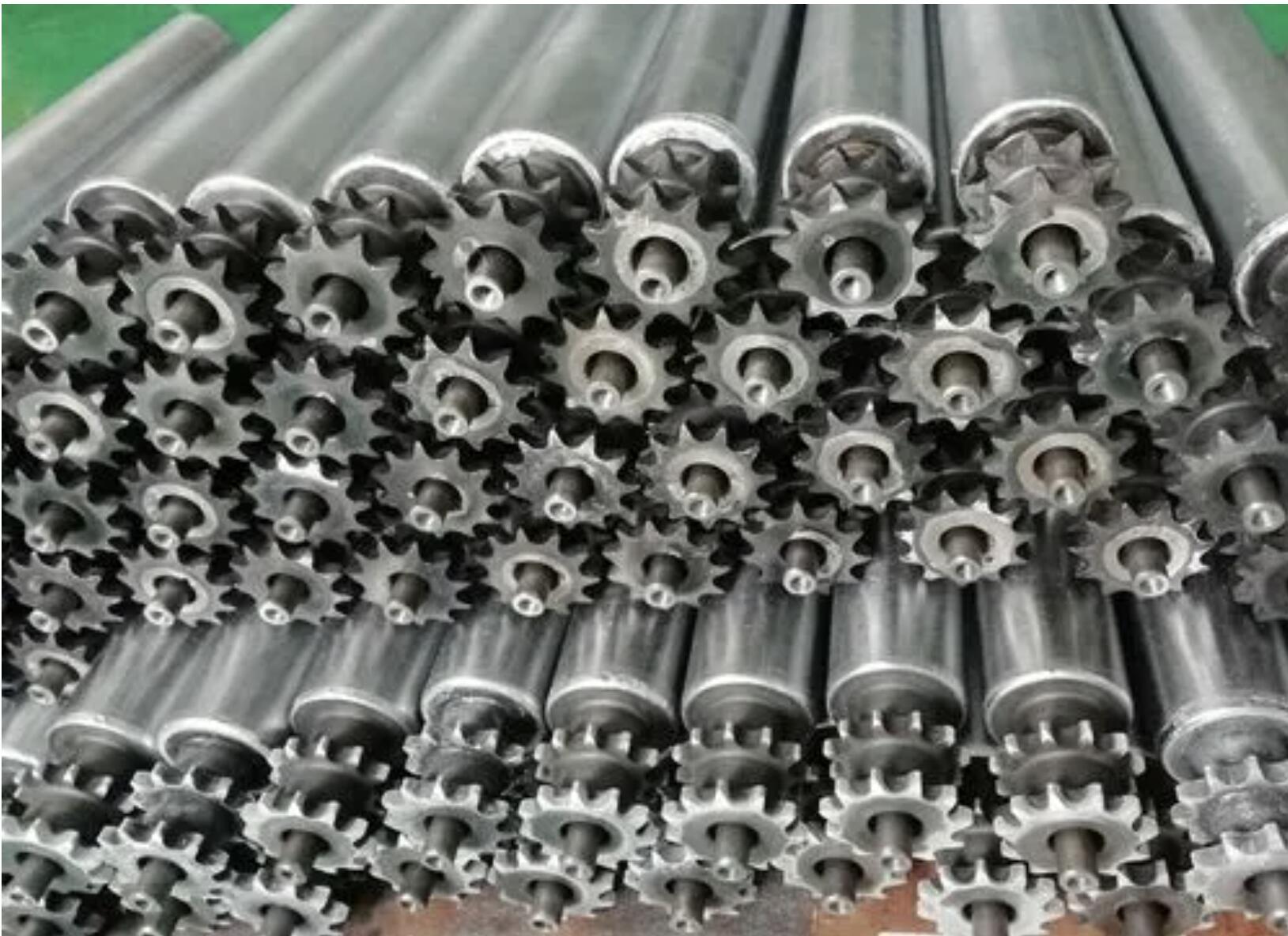
Standard commercial rollers fail rapidly when pushed beyond basic warehouse duties. Heavy-duty engineering becomes mandatory when operational thresholds involve massive weights, abrasive environments, or continuous high-speed movement. Establishing these baseline criteria prevents premature equipment failure. You need to look at the actual physics of your line, not just the static weight of the product.
Static load capacity refers to the resting weight a roller can support without permanent deflection. Dynamic load accounts for the impact forces generated when dropping heavy materials onto the conveyor. Continuous high-speed movement of heavy loads fundamentally alters structural requirements. A roller rated for a high static load may still buckle under the repetitive dynamic impact of steel billets or heavy pallets dropping onto the line. Engineers must calculate the shock load factor, which often requires multiplying the static load by three or four to find the true dynamic requirement.
Different industries impose unique environmental stressors on conveyor systems. Recognizing these variables dictates the engineering approach.
Mining and Bulk Material Handling: These environments demand extreme abrasion resistance and robust protection against heavy particulate ingress that destroys standard bearings.
Steel and Cement Plants: Operations require extreme temperature tolerance and the ability to support heavy continuous loads without structural fatigue.
Warehouse and Heavy Assembly: The focus shifts to throughput maximization, precise movement of large or long components, and seamless integration with automated workflows.
Buyers must utilize a strict engineering framework to assess product durability and performance. Evaluating specific technical dimensions ensures the chosen Heavy Duty Conveyor Roller will survive extreme applications. This means looking closely at the metallurgy, the bearing housing, and the shaft design.
A direct mathematical relationship exists between roller diameter, wall thickness, and deflection limits under heavy loads. Larger diameters rotate fewer times per foot of travel, which reduces bearing wear. Thicker walls prevent denting from impact. Oversized, high-carbon steel or hex shafts are necessary to prevent bending and ensure frame rigidity. Long-span, oversized rollers face unique structural integrity challenges, including sagging and deflection under heavy continuous use, requiring precise engineering calculations.
Precision ABEC-rated bearings offer superior load distribution and longevity compared to non-precision bearings in heavy-duty contexts. However, bearings are only as good as their protection. Sealing technologies, such as labyrinth seals, contact seals, and shielded bearings, are critical for preventing premature failure caused by dust, debris, and moisture infiltration.
Material selection directly impacts lifespan and performance. The table below outlines common materials and their specific industrial applications.
| Material / Treatment | Primary Characteristic | Best Industrial Application |
|---|---|---|
| Heavy-Gauge Carbon Steel | Maximum structural strength and rigidity | Standard heavy loads, pallet handling |
| Stainless Steel (304/316) | Corrosion and chemical resistance | Washdown environments, food processing |
| Galvanized Finish | Rust prevention | Humid or outdoor environments |
| Polyurethane Lagging | Impact absorption and high grip | Handling fragile heavy goods, noise reduction |
Rollers must seamlessly integrate with common drive systems, including chain-driven, belt-driven, or motorized drive rollers. Evaluating the physical limits of speed control is necessary. Rollers must handle high-velocity operations, maintaining load stability at assembly speeds of up to 65 feet per minute without excessive vibration or slippage.
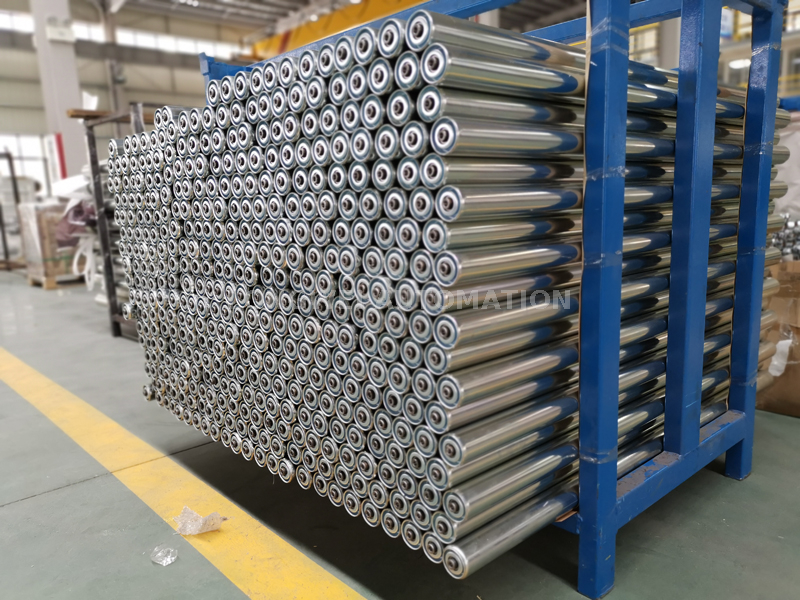
Differentiating between high-tier manufacturers and standard suppliers requires examining their core production capabilities. A reliable supplier offers more than just off-the-shelf components. You need a partner capable of adapting to your specific line requirements.
Standard heavy-duty rollers suffice for predictable loads in controlled environments. Custom lengths, diameters, and specialized coatings are required for proprietary machinery or extreme conditions. Evaluate a manufacturer's in-house engineering support and CAD/prototyping capabilities to ensure they can design solutions tailored to specific operational hurdles.
Assess the supplier’s core production technologies. They must possess the ability to handle specialized cast iron ends, forged steel parts, or press-fitted shaft assemblies. Advanced welding techniques, such as continuous automated weld joints, are critical to preventing structural failure under cyclic heavy-duty load conditions.
Precision machining and dynamic balancing are critical for exceptionally long or heavy rollers. These processes prevent vibration and uneven wear at high speeds, ensuring smooth operation and extending the lifespan of both the roller and the conveyor frame.
Request specific QA documentation before finalizing a supplier. Follow these steps to verify a manufacturer's testing rigor:
Request documented runout tolerances for all custom roller lengths.
Ask for metallurgical certifications for the steel tubing and shafts.
Review destructive and non-destructive load testing results from previous similar projects.
Demand dynamic spin-test reports to verify balancing at your required operational speeds.
Procurement decisions must weigh initial costs against long-term operational efficiency. Investing in robust engineering yields significant returns over the equipment's lifespan. You are buying uptime, not just steel tubes.
Over-specifying a roller with thicker walls and premium bearings exponentially increases the mean time between failures. Cheap rollers carry hidden costs, including frequent maintenance shutdowns, high labor costs for continuous replacement, and damaged goods from line jams.
Reliable heavy-duty roller conveyors eliminate the manual handling of massive loads. This directly reduces ergonomic workplace injuries. Sustained, uninterrupted throughput in high-volume manufacturing provides a rapid return on investment by keeping production lines moving without manual intervention.
Sourcing and installing heavy-duty conveyor systems present logistical and technical hurdles. Proactive mitigation keeps projects on schedule and prevents costly installation errors.
Relying on overseas suppliers for custom heavy-duty components introduces risks like shipping delays and communication gaps regarding exact tolerances. Mitigate these risks by establishing clear Service Level Agreements for lead times and verifying domestic warehousing or production capabilities.
Retrofitting new heavy-duty rollers into existing, potentially warped or older conveyor frames presents significant dimensional challenges. Require on-site assessments or strict tolerance matching from the manufacturer before mass production begins to ensure seamless integration.
Sourcing the right Heavy Duty Conveyor Roller is ultimately an exercise in risk management. By calculating precise static and dynamic loads, accounting for harsh environmental stressors, and vetting suppliers on their raw material standards and QA protocols, procurement teams can protect their capital assets from premature failure.
To ensure your custom engineering requirements are met with absolute precision, partnering with an experienced industry specialist is crucial.Longweiis a leading manufacturer specializing in heavy-duty conveyor rollers, engineered to deliver maximum load capacities and extreme durability in the harshest industrial settings. Their advanced automated machinery, dedicated quality assurance, and custom fabrication expertise ensure your conveyor systems operate with optimized uptime and maximum safety.
To successfully implement a new system or upgrade an existing line, follow these actionable steps:
Compile exact environmental data, including temperature ranges, moisture levels, and chemical exposure.
Calculate both static resting weights and maximum dynamic impact loads for your heaviest products.
Measure existing conveyor frame dimensions, noting any warping or structural degradation.
Draft a comprehensive Request for Quote detailing these specific engineering requirements.
Schedule an on-site engineering consultation with your shortlisted manufacturers to verify tolerances.
A: Divide the maximum product weight by the number of rollers under the product at any given time. Always factor in dynamic impact loads and uneven weight distribution to ensure a sufficient safety margin.
A: Precision ABEC-rated bearings equipped with multi-labyrinth seals are optimal. These seals effectively block particulate ingress, preventing the abrasive wear that destroys standard bearings in dusty conditions.
A: Choose stainless steel for corrosive environments, chemical exposure, or washdown applications. Despite the higher initial cost, stainless steel prevents rust and structural degradation in these harsh settings.
A: Larger diameters rotate fewer times per foot of travel. This reduces bearing wear and allows the roller to handle heavier loads with significantly less deflection compared to smaller diameter options.
A: Lead times vary widely based on material availability, engineering complexity, and order volume. Always ask manufacturers directly and establish clear delivery agreements during the quoting process.
A: Yes. Automated movement of massive loads eliminates the need for manual pushing or pulling. This directly mitigates severe ergonomic hazards and musculoskeletal injuries among facility workers.
A: Longer spans require specialized engineering to minimize roller deflection. Integrated speed control systems require rollers designed to handle rapid acceleration and deceleration forces without slipping or vibrating.


