
Views: 0 Author: Site Editor Publish Time: 2026-03-19 Origin: Site
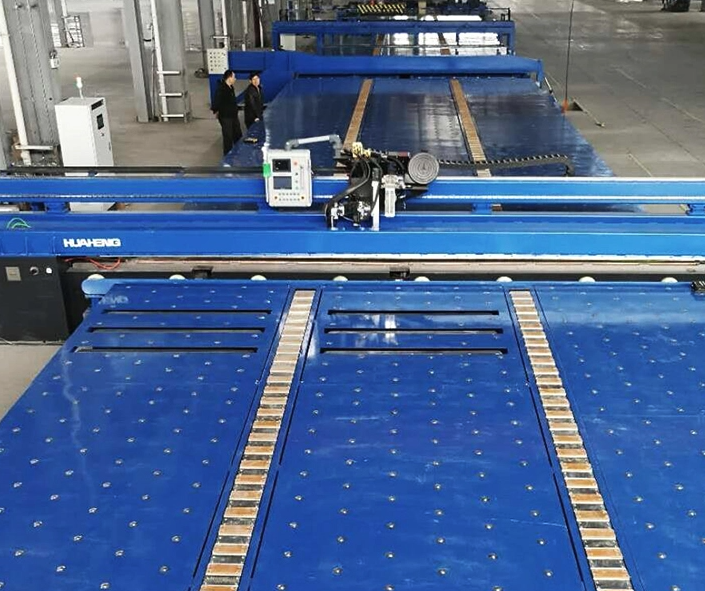
Custom Conveyors are key to efficient manufacturing, warehousing, and e-commerce operations. Choosing between customized and fully custom conveyor systems affects workflow, cost, and scalability. This guide explains flexibility, lead times, and industry applications, helping you decide which solution fits your operational needs and growth goals.
Standard conveyors are off-the-shelf systems designed for general material handling. They come pre-engineered with fixed dimensions and are often mass-produced, making them easy to order and install.
Key Characteristics:
Pre-designed lengths, widths, and layouts
Ready-to-use components, minimal setup
Designed for typical industrial applications
Benefits:
Affordable compared to custom options
Quick delivery and installation
Proven reliability across standard tasks
Easy to maintain and repair
Limitations:
Limited flexibility for unusual products
Cannot adapt to complex layouts or workflows
May need additional modifications for unique applications
Common Applications:
Warehousing and distribution centers
Light manufacturing lines
Packaging and sorting of uniform products
Customized conveyors are assembled from standard modules but configured to meet specific operational needs. They bridge the gap between standard and fully custom systems.
Features:
Adjustable lengths, widths, and turns
Modular assemblies for easy reconfiguration
Can integrate some automation or accessories
Benefits:
Flexibility without fully custom design
Faster lead times than custom conveyors
Can solve mid-level workflow challenges
Often more cost-effective than fully custom solutions
Applications:
Production lines with moderate complexity
Facilities with space constraints or unusual layouts
Operations needing workflow optimization but not full engineering
Example Table: Customized Conveyor Adjustments
| Feature | Possible Customization |
|---|---|
| Conveyor length | Extended or shortened modules |
| Conveyor width | Adjustable belt sizes |
| Turns or curves | Pre-engineered corner modules |
| Integration | Basic sensors or sorters |
Custom conveyors are built from scratch for specific tasks, products, or materials. They handle situations where standard or customized options cannot deliver.
Features:
Specialized materials and construction
Automation and sensor integration
Designed for unusual layouts or complex workflows
Benefits:
Solve difficult operational challenges
Highly scalable for future needs
Perfect alignment with unique production processes
Limitations:
Higher initial cost
Longer design and manufacturing lead times
Requires engineering expertise for setup and maintenance
Applications:
Automotive assembly lines handling heavy or irregular parts
Pharmaceutical and food processing production
E-commerce warehouses with complex sortation systems
When evaluating customized conveyors vs. custom conveyors, the differences go beyond labels. They influence production line efficiency, operational costs, and long-term workflow flexibility. Understanding each aspect helps businesses make smarter material handling decisions.
Customized conveyors are built from pre-engineered modules. We assemble sections to fit your layout, saving design time and reducing complexity.
Custom conveyors are fully engineered from scratch. Every component, belt, and roller is designed for your specific product handling needs.
Customized systems are ideal for businesses needing moderate adaptation. Custom systems suit operations where standard components cannot meet workflow requirements.
Think of customized as “tailored from a template,” and custom as “designed entirely from scratch.”
Customized conveyors provide a moderate level of flexibility. You can adjust lengths, widths, and turns using modular assemblies, which allows the system to fit most workflow layouts without a complete redesign. On the other hand, custom conveyors offer full flexibility, handling irregular product shapes, heavy loads, or specialized processing requirements. They can seamlessly integrate with automation, sensors, and robotics, adapting as your production line evolves or as new products are introduced. This level of customization ensures the system grows alongside your operational needs.
When it comes to cost, customized conveyors usually require a lower upfront investment because they use standard modules. They are cost-effective for mid-level complexity operations where basic adaptation is sufficient. In contrast, custom conveyors involve a higher initial investment due to specialized design and fabrication. Despite the higher upfront cost, they often deliver long-term savings by improving workflow efficiency, reducing downtime, and minimizing maintenance needs. When evaluating options, it’s important to consider total cost of ownership (TCO), factoring in lifespan, productivity gains, and overall operational efficiency.
Customized conveyor systems can be delivered and installed more quickly because pre-engineered modules are ready for assembly. This makes them ideal for businesses needing rapid deployment or facing tight deadlines. Custom conveyors, however, require longer development cycles. Engineering, prototyping, and testing ensure that every component meets your specific production line requirements. Depending on complexity, lead times can range from a few weeks for a modular customized system to several months for a fully engineered custom solution.
Scalability is another key consideration. Customized conveyors offer modular scalability, allowing you to add extensions, modify turns, or integrate additional sections without redesigning the entire system. Custom conveyors, on the other hand, are built to be future-proof. They can accommodate automation integration, IoT tracking, and evolving production processes, giving your material handling system the flexibility to grow alongside your business. If long-term adaptability is a priority, fully custom solutions often provide the best return on investment and ensure your workflow remains optimized over time.
Customized conveyors excel in e-commerce fulfillment centers, packaging lines, and light manufacturing, where product types are moderately varied.
Custom conveyors perform best in industries requiring precise control, like automotive assembly, pharmaceuticals, food processing, and high-speed sortation systems.
Each type is optimized for specific operational goals, from material flow efficiency to automation compatibility.
| Feature | Customized Conveyors | Custom Conveyors |
|---|---|---|
| Design Approach | Pre-engineered modules | Fully engineered for unique tasks |
| Flexibility | Moderate, adjustable sections | Fully tailored for product and workflow |
| Cost | Lower upfront, quick ROI | Higher upfront, long-term efficiency |
| Lead Time | Shorter, faster deployment | Longer, detailed engineering required |
| Scalability & Future-Proofing | Modular, expandable | Fully adaptable, automation-ready |
| Industry Use Cases | E-commerce, packaging, light manufacturing | Automotive, pharmaceuticals, food processing, high-speed sortation |
| Integration Potential | Basic sensors, simple automation | Advanced automation, robotics, IoT |
Selecting the right conveyor system is more than picking a model. It affects production efficiency, workflow optimization, and long-term operational costs. Let’s break down key steps for making the best choice between customized conveyors and custom conveyors.
Start by evaluating your product types, sizes, and handling requirements. Irregular or delicate items may need fully custom solutions.
Consider your production complexity. Are processes linear, or do you have branching, merges, or multiple workstations?
Layout matters. Limited floor space, unusual facility shapes, or integration with existing equipment often requires tailored designs.
Workflow challenges, such as high throughput demands or sensitive material handling, can determine whether modular customization is enough or a full custom design is needed.
Compare initial investment against potential efficiency gains. Customized conveyors cost less upfront, while custom conveyors may save more in the long run.
Factor in total cost of ownership (TCO): downtime, maintenance, part replacements, and upgrades over the system’s life.
Consider how design impacts productivity. A conveyor that reduces jams or speeds handling can justify higher upfront costs.
Evaluate potential return on investment by modeling workflow improvements and labor savings.
Cost Considerations Table
| Factor | Customized Conveyors | Custom Conveyors |
|---|---|---|
| Initial Investment | Lower | Higher |
| Maintenance & Repairs | Moderate | Reduced due to tailored design |
| Downtime Risk | Standard | Lower, engineered for reliability |
| Long-Term ROI | Medium | High |
Anticipate production growth or product diversification. Will your system need expansion?
Customized conveyors offer modular flexibility. You can add sections or modify turns without redesigning everything.
Custom conveyors are fully adaptable. They can integrate automation, advanced control systems, and IoT monitoring for future upgrades.
Planning for scalability ensures your conveyor system evolves alongside business demands.
Expansion Strategy Example:
Modular extension for e-commerce sorting line (customized)
Full integration of robotics and automated sortation for automotive assembly (custom)
| Industry | Conveyor Recommendation | Key Considerations |
|---|---|---|
| Food & Beverage | Custom conveyors | Sanitation, hygiene, easy-clean surfaces |
| Automotive | Custom conveyors | Heavy parts, robotic integration, precise handling |
| Pharmaceuticals | Custom conveyors | Contamination control, precision, regulatory compliance |
| E-commerce & Warehousing | Customized or hybrid conveyors | High throughput, varied package sizes, space efficiency |
Food operations demand materials that meet sanitary standards and allow frequent cleaning.
Automotive lines often handle heavy components, requiring reinforced custom conveyors that integrate with robots.
Pharmaceuticals need precision control and contamination prevention, where custom designs shine.
E-commerce or warehouse operations benefit from customized modular systems, balancing speed and flexibility.
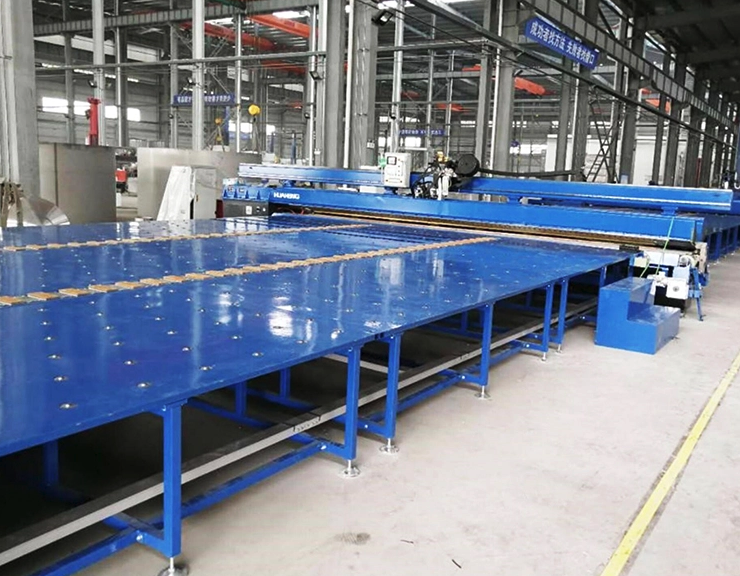
The right choice between customized and custom conveyors boosts efficiency and reduces downtime. Longwei Automation helps design and implement systems tailored to your workflow, ensuring both immediate performance and future scalability.
A: Customized conveyors use standard modules adapted to specific layouts, while custom conveyors are fully engineered from scratch for unique operational needs.
A: Standard or customized conveyors are ideal for small-scale operations due to lower costs and faster implementation.
A: Designing a custom conveyor can take several months, including engineering, prototyping, and testing.
A: They can be, especially for mid-complexity operations, but standard conveyors usually have lower upfront costs.
A: Evaluate product types, workflow complexity, hygiene or load requirements, and long-term scalability for your specific industry.


