Views: 0 Author: Site Editor Publish Time: 2026-11-23 Origin: Site

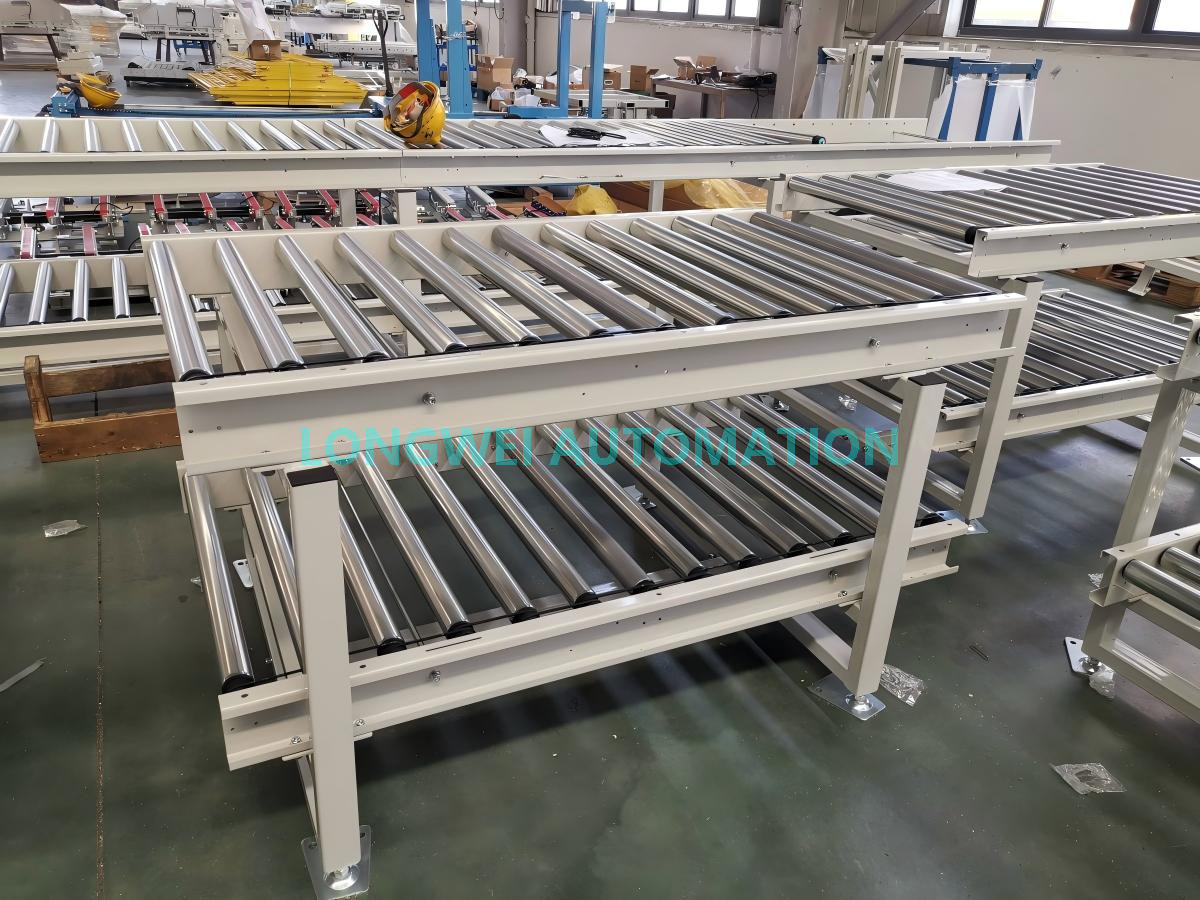
Choosing the right high speed roller conveyor is essential for maintaining efficient material flow in automated sorting systems. These conveyors are widely used in parcel distribution centers, e-commerce fulfillment warehouses, and industrial logistics facilities to transport packages between scanning, accumulation, and sorting stations. Their performance depends on factors such as roller drive technology, conveying speed, load capacity, product dimensions, and integration with downstream sorting equipment. Options such as Motorized Driven Roller (MDR) and Belt-Driven Live Roller (BDLR) systems offer different advantages in zone control, continuous transport, and maintenance requirements. Understanding these differences helps engineers and procurement teams select a conveyor system that matches their throughput targets, packaging conditions, facility layout, and long-term operating costs.
Throughput vs. Product Physics: Maximum mechanical speed is irrelevant if the system cannot maintain product orientation; selection must balance speed with the physical limitations of the conveyed items (weight, shape, packaging type).
Drive Technology Dictates Capability: The choice between Motorized Driven Roller (MDR) and Belt-Driven Live Roller (BDLR) fundamentally impacts energy consumption, maintenance schedules, and zone control capabilities.
Integration is the True Bottleneck: The most advanced mechanical system will fail without seamless Warehouse Control System (WCS) integration, precise gapping, and accurate divert synchronization.
Long-Term Value Over CapEx: Initial hardware costs are secondary to long-term energy efficiency, spare parts availability, and the financial risk of unplanned downtime.
Table of Contents
We measure throughput in cases or parcels per minute under peak load conditions. Measuring feet-per-minute provides an incomplete picture of actual facility output. Belt speed does not equal processing capacity. If a system runs at 300 feet per minute but requires 36-inch gaps between items for the downstream sorter, actual throughput drops significantly. You must calculate the exact product length plus the required gap to determine true capacity. High-speed operations require precise mathematical modeling to ensure downstream sorters receive a steady, manageable flow. Surge capacity dictates success during holiday peaks. A system designed only for average daily volume will fail when demand spikes. We look at the maximum historical surge and add a 20 percent buffer for future growth.
To accurately model your baseline throughput, follow these calculation steps:
Measure the average and maximum length of your conveyed products.
Determine the minimum gap required by your specific downstream sortation equipment.
Add the maximum product length to the minimum gap distance to find the total footprint per item.
Divide the conveyor speed by the total footprint to calculate maximum items per minute.
Apply a realistic operational efficiency multiplier to account for irregular feeding and minor jams.
Operational tipping points force facilities to abandon legacy systems. Volume surges and severe labor shortages make manual pushing unsustainable. Gravity conveyors create dead zones where products stall and require human intervention. Standard powered lines lack the sophisticated zone control needed for high-volume surges. They often crush delicate packages when downstream backups occur. Upgrading becomes mandatory when your current infrastructure limits your daily shipping capacity. Automated solutions eliminate manual handling and maintain a continuous, controlled flow. This transition requires a shift from simple mechanical transport to intelligent, sensor-driven material handling. You replace brute force with precise tracking.
You must set strict acceptable limits for mis-sorts, jams, and physical damage. High-speed systems must handle delicate packaging without crushing it. Precision matters just as much as raw mechanical speed. A conveyor that moves fast but damages ten percent of your inventory is a liability. You need to establish thresholds for barcode read failures caused by poor product orientation. High-speed diverts can easily tear polybags or dent corrugated boxes if not properly calibrated. Your success criteria must prioritize product integrity alongside rapid transport. Set measurable product damage and mis-sort targets based on the facility's packaging types, handling conditions, and operational requirements. Actual performance should be evaluated through system testing and monitored using agreed acceptance criteria.
Frame your operational success around Mean Time Between Failures and Mean Time to Repair. High-speed operations cannot tolerate extended downtime. A ten-minute jam during a peak shift cascades into hours of delayed shipments. You need systems built with quick-swap components to keep lines moving. Evaluate how easily technicians can replace a damaged roller or a snapped drive belt. High reliability metrics ensure your facility meets strict carrier cutoff times. Unplanned downtime destroys operational efficiency and frustrates waiting customers. We track these metrics weekly to identify recurring mechanical issues before they cause catastrophic failures.
MDR systems use motorized rollers with integrated electric motors, commonly available in low-voltage DC configurations such as 24V. The motorized rollers transfer power to adjacent idler rollers through O-rings or Poly-V belts, depending on the conveyor design. They feature decentralized drive configurations and run-on-demand capabilities. Photo-eye sensors detect approaching products and activate specific zones. With photo-eye sensors and zone controllers, MDR conveyors can operate on demand. Individual zones activate when products enter and stop when no products are present, depending on the selected control configuration. This intelligent operation significantly reduces mechanical wear and saves massive amounts of energy. MDR systems link a single motorized roller to several idler rollers using polyurethane O-rings or Poly-V belts. This creates independent, highly controllable zones across the entire conveyor line.
MDR technology excels in applications requiring zero-pressure accumulation. It provides modular zone control and exceptional energy efficiency. Facilities use MDR to queue products smoothly before scanning tunnels or sortation diverts. The modular nature allows for rapid layout changes and easy expansion. You can swap a failed motorized roller in minutes without shutting down the entire line. This makes MDR ideal for complex parcel hubs handling diverse package sizes.
However, MDR systems face specific technical limitations. You must balance energy efficiency against maximum weight capacity. Heavy unit loads can stall standard 24V DC motors. Extreme continuous speeds can overtax the internal components and lead to premature failure. MDR is not designed for moving heavy pallets or running continuously without gaps. You must carefully match the motor torque specifications to your heaviest expected parcel.
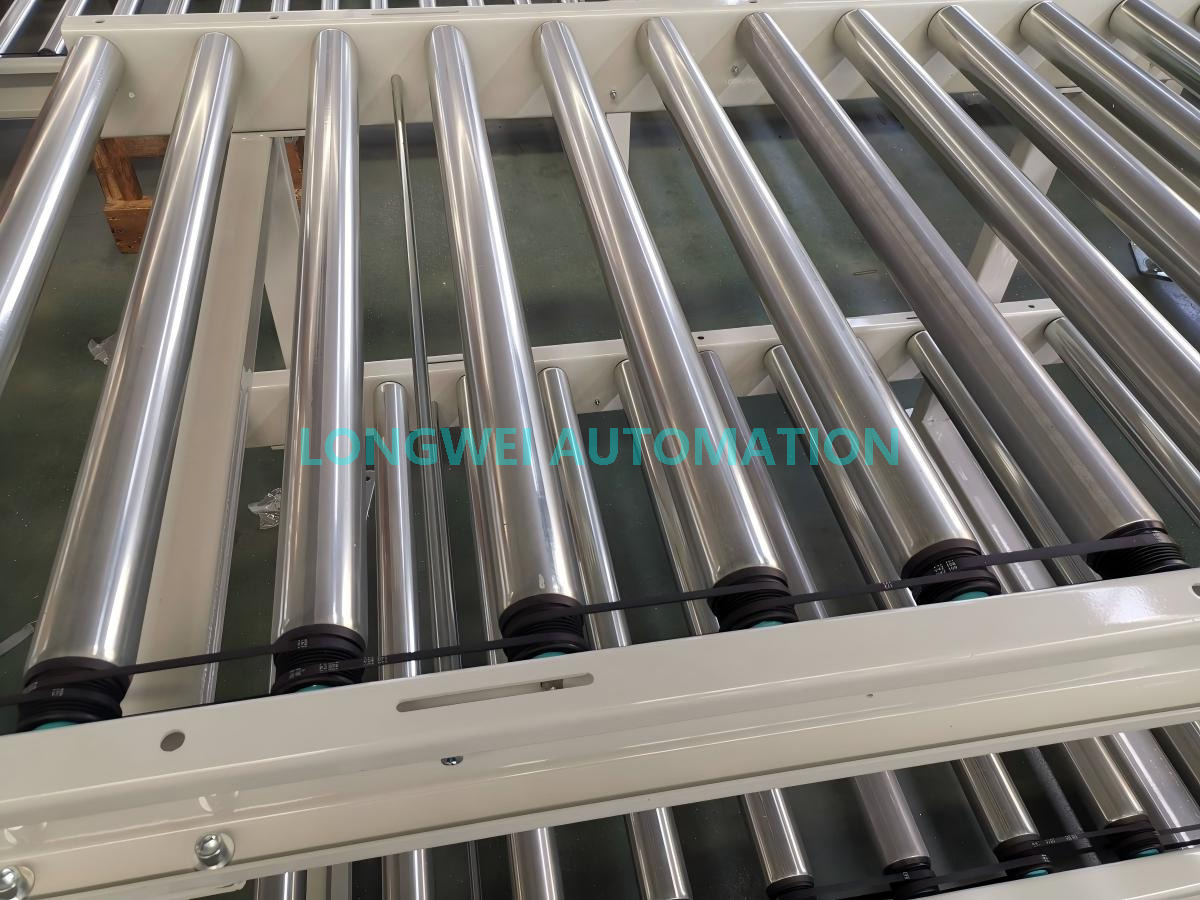
A continuous motorized belt drives the rollers from beneath in a BDLR system. Snub rollers press the driving belt against the transport rollers to transfer power. This mechanism provides consistent, unyielding power across extremely long zones. A single large AC motor can drive dozens of feet of conveyor. The rollers spin continuously as long as the main drive motor runs. This creates a robust, high-capacity transport mechanism.
BDLR systems handle heavy-duty, continuous transport exceptionally well. They excel on long straightaways in massive parcel hubs. When you need to move heavy boxes over long distances quickly, BDLR provides unmatched brute force. They handle varied weights easily because the continuous belt provides consistent torque to every roller. Facilities use them for main transport arteries where accumulation is not required.
Limitations include significantly higher maintenance requirements. Belt tracking and tensioning require skilled technicians and regular adjustments. The continuous energy draw results in higher utility bills compared to run-on-demand systems. BDLR systems also generate elevated noise levels due to the constant friction between the drive belt and the rollers. Replacing a worn drive belt requires significant downtime and specialized tools.
These systems use servo motors, precision-driven rollers, and coordinated control components to manage product speed, acceleration, deceleration, and positioning along the conveyor line. They deliver exact positioning for complex automated operations. Servo motors provide absolute control over acceleration, deceleration, and final positioning. They integrate seamlessly with high-speed vision systems and robotic picking arms. The mechanical components are machined to exacting tolerances to eliminate vibration and drift.
Use precision systems for applications requiring micro-adjustments before high-speed diverts. They work perfectly in scanning tunnels and automated labeling stations. Strict orientation control prevents barcode read failures downstream. When a label must be applied within millimeters of a target, servo-driven systems provide the necessary accuracy. They are essential for automated weigh-in-motion scales and dimensioning systems.
Conveyor Type | Drive Mechanism | Best Application | Primary Limitation |
|---|---|---|---|
MDR | 24V DC Internal Motors | Zero-pressure accumulation, zone control | Weight capacity limits, extreme continuous speed |
BDLR | Continuous Under-Belt | Long straightaways, heavy-duty transport | High energy draw, complex belt maintenance |
Servo-Driven | Precision Servo Motors | Scanning tunnels, automated labeling | Higher initial complexity and integration demands |
Weight distribution, maximum dimensions, and center of gravity dictate your hardware choices. Tall boxes with high centers of gravity tip over easily during rapid acceleration. You must select the correct roller diameter and gauge to support your specific loads. Heavy pallet handling requires massively different specifications than high-speed parcel sortation. Ensure the conveyor's weight class matches your specific application perfectly. Undersized rollers will warp and fail under heavy loads. Roller diameter and wall thickness should be selected according to the maximum unit load, product dimensions, conveying speed, and required load capacity. Larger or heavier products may require larger-diameter rollers and stronger supporting structures, while standard parcel applications can use smaller roller configurations when properly engineered.
Packaging variability introduces significant conveying dynamics. Rigid corrugated boxes convey smoothly and predictably. Polybags, padded mailers, and soft plastics behave erratically. They catch in gaps, sag between rollers, and lose orientation easily. You must design the system to handle your worst-case packaging scenario. Maintaining strict product orientation is vital for downstream barcode scanning and sortation accuracy. A skewed box will jam a narrow belt sorter instantly.
Calculate the correct roller pitch to ensure at least three rollers support the product constantly. Roller pitch is the distance between the center of one roller and the next. If the pitch is too wide, small items will bounce or fall through. Select the right roller coating to maintain grip at high speeds. Polyurethane sleeves or specialized rubber coatings prevent slippery polybags from sliding during inclines or rapid deceleration.
Follow these guidelines for handling irregular packaging:
Reduce roller pitch to 2 inches or less for small polybags to prevent sagging.
Install high-friction polyurethane sleeves on drive rollers to maintain grip on slick plastic mailers.
Utilize solid belt conveyor sections instead of rollers for areas where extreme packaging variability causes consistent jams.
Implement captive tote systems for items that simply cannot be conveyed directly on rollers.
High-speed roller systems have strict limitations regarding elevation changes. Rollers rely on friction to move products upward. Steep inclines cause boxes to slip backward, creating dangerous jams. You must integrate high-friction belt conveyor segments for significant elevation changes. Belts grip the product securely and transport it safely to the next level. Never attempt to push roller conveyors beyond their safe incline angles.
Curves require careful evaluation and precise engineering. Tapered rollers help maintain product orientation and spacing through turns. Straight rollers in a curve force products against the outer guardrail, causing damage and jams. High-speed curves must be designed with the exact turning radius needed for your largest boxes. Poorly designed curves cause severe bottlenecks and destroy facility flow. Always include proper side guards to contain products during high-speed cornering.
Evaluate systems based on surge capacity rather than average daily volume. Peak throughput modeling reveals how the system handles holiday volume spikes. You need to know exactly what happens when a massive wave of orders hits the shipping dock. A system that runs perfectly at fifty percent capacity might fail catastrophically at ninety percent. Demand rigorous simulation data from your integration partners.
Compare zero-pressure accumulation against minimum-pressure accumulation. Zero-pressure accumulation divides the conveyor into isolated zones. It ensures products never touch each other while queued. This prevents fragile items from being crushed. Minimum-pressure accumulation allows products to bump lightly against each other. It costs less but risks damaging delicate packaging. Zero-pressure accumulation is particularly useful for fragile packages and applications requiring independent zone control. However, the appropriate accumulation method depends on product characteristics, conveyor layout, downstream sorter requirements, and the required spacing between items.
Precise product gapping creates necessary space between items before they reach the sortation point. Without proper gapping, diverts fail and mis-sorts multiply. The sorter needs time to actuate, move the product, and reset for the next item. If products are too close together, the sorter will strike the second item, causing a massive jam. Speed up zones are typically used to pull gaps between tightly packed boxes.
Evaluate how the conveyor integrates with specific divert mechanisms. Pop-up steerable rollers require precise infeed speeds. Sliding shoe sorters demand perfect product orientation. Narrow belt sorters and pneumatic pushers all require specific conditions to function correctly. The high speed roller conveyor must deliver the product exactly when and how the sorter expects it. Mismatched speeds between transport and sortation lead to continuous operational failures.
Compare the electrical costs of continuous-run BDLR systems against run-on-demand MDR systems. Over a five-to-ten-year lifecycle, energy consumption profiles vary wildly. MDR systems sit idle when no products are present, slashing electrical usage. BDLR systems draw massive power continuously, regardless of actual load. You must calculate these long-term utility expenses when evaluating different technologies. Cheaper initial hardware often results in massive long-term energy bills.
Evaluate maintenance demands and the lifespan of wear parts. Replacing O-rings, drive belts, and individual rollers should not require taking down the entire line. MDR systems allow technicians to swap a single roller in minutes. You simply disconnect the motor cable, pop the hex shaft out of the frame bracket, and drop in a replacement. BDLR systems might require hours of downtime to re-lace and track a new drive belt. You have to relieve tension on the entire drive section, thread the new belt through the snub rollers, and carefully adjust the tracking to prevent edge wear. Factor the financial risk of unplanned downtime into your decision. Easy maintenance directly translates to higher facility profitability. We stock essential spare parts directly on the maintenance carts to minimize repair times during peak shifts.
Component | MDR Replacement Time | BDLR Replacement Time | Required Tools |
|---|---|---|---|
Drive Roller | 5 - 10 Minutes | Not Applicable | Wrench, Allen Keys |
Drive Belt / O-Ring | 2 - 5 Minutes | 2 - 4 Hours | Pry Bar, Tensioner |
Photo-Eye Sensor | 10 Minutes | 10 Minutes | Screwdriver, Multimeter |
Plug-and-play modular architectures allow facilities to adapt quickly to changing markets. You can add accumulation zones or change divert locations as business needs evolve. Modular systems use standardized frames and pre-wired connections. This allows your maintenance team to reconfigure lines over a weekend without specialized engineering support. Agility is a massive operational advantage in fast-paced fulfillment environments.
Weigh the performance benefits of custom-engineered fixed systems against standardized modular systems. Custom systems might offer slightly higher absolute speeds for very specific applications. However, standardized components offer faster deployment and easier parts sourcing. When a custom part breaks, you might wait weeks for a replacement. Standardized modular parts are usually stocked locally and ship overnight. Prioritize systems that guarantee rapid spare parts availability.
Inadequate floor space compromises incline angles and accumulation lengths. Tight curves cause frequent jams and damage products. Trying to cram a massive sorting system into a small building always leads to operational disaster. Narrow aisles make maintenance impossible and create safety hazards for workers. You must respect the physical space requirements of high-speed material handling equipment.
Mitigate this risk with 3D simulation and digital twin modeling. Conduct rigorous routing analysis prior to finalizing procurement. A digital twin allows you to test the layout virtually before pouring concrete or bolting steel to the floor. You can identify pinch points, test accumulation limits, and verify curve radii. This ensures optimal plant flow and prevents costly physical modifications during installation.
Accurate communication between the conveyor PLC, Warehouse Control System (WCS), and Warehouse Management System (WMS) is essential for reliable automated sorting. The PLC controls local equipment operations, including motor activation, sensor signals, and divert mechanisms. The WCS coordinates product routing, tracking, and sorting instructions, while the WMS manages higher-level warehouse operations and order information. Delays or incorrect data exchanges between these systems can affect product tracking, divert timing, and overall sorting accuracy. The required communication response time should be determined according to conveyor speed, product spacing, sensor positions, and sorter operating cycles.
Standardize industrial communication protocols like EtherNet/IP or PROFINET to ensure rapid data transfer. Mandate comprehensive Factory Acceptance Testing before the equipment ships. Test the software integration thoroughly in a controlled environment. Do not wait until the system is installed in your facility to discover communication bugs. Rigorous software testing is just as important as mechanical inspection.
Proper sensor placement is essential for accurate tracking. Photo-eyes must be positioned correctly to detect the leading and trailing edges of every package. If a sensor is mounted too high, it will miss flat mailers. If it is mounted too low, it might trigger falsely on conveyor side frames. We align sensors precisely to ensure the PLC receives accurate positional data for every item on the line.
High-speed systems can easily exceed OSHA noise limits. Constant mechanical clatter creates a hostile work environment and causes worker fatigue. Exposed drive belts and spinning rollers create severe pinch-point hazards. Complex layouts often force technicians into dangerous positions to perform basic maintenance. Ignoring safety and ergonomics leads to injuries and severe regulatory fines.
Specify low-decibel precision bearings and acoustic dampening materials to control noise. Include integrated safety guarding around all moving parts. Ensure all drive components remain easily accessible from standard walkways. Technicians should never have to crawl under running equipment to adjust a sensor. Prioritize systems designed with human safety and maintenance ergonomics in mind.
Conduct a comprehensive facility audit to identify current sorting bottlenecks and measure available floor space.
Map out exact product dimensions, weights, and packaging types handled daily to determine required roller specifications.
Request a peak-volume throughput simulation from your integration partner to verify surge capacity.
Establish strict acceptable limits for noise, energy use, and maintenance downtime before finalizing any procurement contracts.
A: Practical speeds typically range from 150 to 400 feet per minute. Maximum speed depends entirely on product stability, packaging type, and downstream sortation capabilities. Pushing beyond mechanical limits causes orientation loss and frequent jams.
A: Upgrades become necessary when manual pushing causes labor bottlenecks or when volume surges exceed human handling capacity. If gravity lines create dead zones or you need precise gapping for automated sortation, powered systems are required.
A: Choose MDR for zero-pressure accumulation, modular zone control, and energy efficiency. Select BDLR for heavy-duty continuous transport across long straightaways where constant power and high throughput are prioritized over localized zone control.
A: Yes, but they require specific configurations. You must use a tighter roller pitch to prevent sagging. Polyurethane sleeves or specialized coatings help grip irregular packaging. In extreme cases, placing polybags in captive totes ensures reliable transport.
A: Roller conveyors struggle with steep elevation changes due to product slippage. For inclines exceeding standard friction limits, facilities integrate high-friction belt conveyor segments to maintain control and prevent items from tumbling backward.
A: Zero-pressure accumulation divides the conveyor into zones. It ensures products never touch each other while queued. This prevents fragile items from being crushed and maintains precise gaps required for accurate downstream sortation.
A: Roller pitch is the distance between roller centers. A tighter pitch ensures at least three rollers support the product at all times. This prevents bouncing, maintains orientation, and ensures accurate tracking at high speeds.