
Views: 0 Author: Site Editor Publish Time: 2026-03-19 Origin: Site
Customized conveyor solutions for your industry are the key to transforming how your facility handles materials. Whether you’re in manufacturing, food processing, e-commerce, or automotive, off-the-shelf systems often fall short. By tailoring conveyors to your workflow, products, and space, you can boost efficiency, reduce errors, and enhance safety. Longwei Automation specializes in designing and installing industry-specific conveyor systems that fit your unique needs, helping your team achieve smoother operations and higher productivity.
Off-the-shelf conveyor systems can seem convenient, but they often fall short for many businesses. They are designed to serve general purposes, not specific workflows, and that’s where problems start.
Generic conveyor systems often don’t match your facility’s unique layout, forcing adjustments that slow down operations. Space constraints can make installation awkward, and standard equipment may struggle to handle products properly, either moving them too roughly or too slowly. Fixed sizes and speeds limit flexibility, making it difficult to adapt workflows or accommodate changing production demands. For facilities handling delicate food items, heavy machinery parts, or high-speed e-commerce packages, these limitations can reduce efficiency and increase risk of product damage.
| Issue | Impact on Operations |
|---|---|
| Workflow mismatch | Bottlenecks, slowdowns |
| Limited space adaptation | Wasted floor area |
| Standard belt speed | Product damage or delays |
| Fixed structure | Hard to integrate robotics |
They rarely align with existing machinery or production lines. You may find yourself rearranging equipment to make them fit. They often don’t use vertical space efficiently, leaving valuable floor area unused.
Some items need gentle handling, like fragile food or electronics. Others, like automotive parts, need tough belts and rollers. Standard conveyors struggle in both cases.
Heavy Manufacturing: Standard conveyors can’t support oversized metal sheets or machinery parts.
Food Processing: Generic belts may damage delicate items or fail hygiene requirements.
E-Commerce: Fast-paced fulfillment requires conveyors that sort multiple package sizes efficiently.
If your products, workflow, or space needs don’t match generic systems, customization isn’t optional—it’s required. Custom conveyors let you optimize speed, reduce damage, and integrate automation smoothly, solving problems generic systems create.
Customized conveyor systems aren’t just another tool—they change how work flows in your facility. They’re designed to match your processes, products, and space, helping you get more done safely and efficiently.
Streamlines workflow and cuts bottlenecks fast.
Conveyor speed and layout match production demands.
Examples: automotive assembly lines, food processing plants.
Reduces idle time between stations.
| Benefit | How it Helps |
|---|---|
| Faster throughput | Keeps production moving steadily |
| Reduced manual handling | Employees focus on high-value tasks |
| Tailored layout | Smooth transitions between processes |
Built-in safety features match industry requirements.
Reduces manual handling, lowering workplace injury risks.
Guards, emergency stops, and interlocks protect employees.
Helps meet compliance rules in manufacturing or food sectors.
Designed to fit existing facility constraints.
Multi-level and vertical options maximize usable space.
Flexible layouts adapt to irregular floor plans.
Helps avoid costly renovations or expansions.
Modular components allow future expansion.
Easily integrates automation, robotics, or IoT devices.
Can adapt as production demands or product lines change.
Protects long-term investment while keeping operations current.
Engineered to minimize wear and tear.
Components last longer, lowering replacement frequency.
Easy access for routine checks reduces downtime.
Delivers ROI through durability and lower labor costs.
| Feature | Advantage |
|---|---|
| Modular design | Quick reconfiguration or expansion |
| Optimized components | Less breakdown, lower repair costs |
| Accessible layout | Faster maintenance, fewer delays |
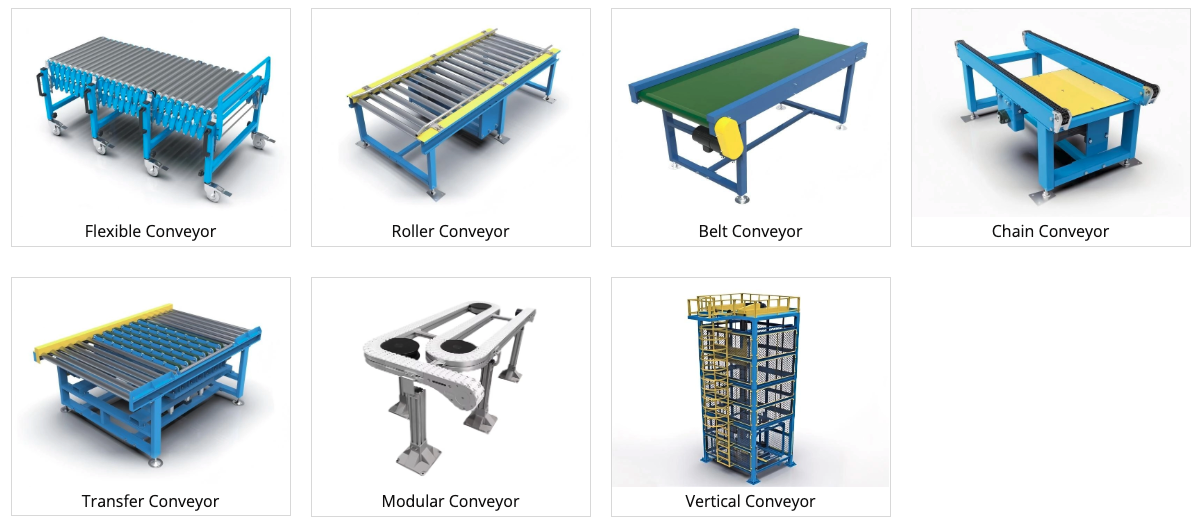
Understanding the right type of conveyor system can transform your operations. Customized conveyor solutions come in various forms, each suited for different industries, product types, and workflow needs.
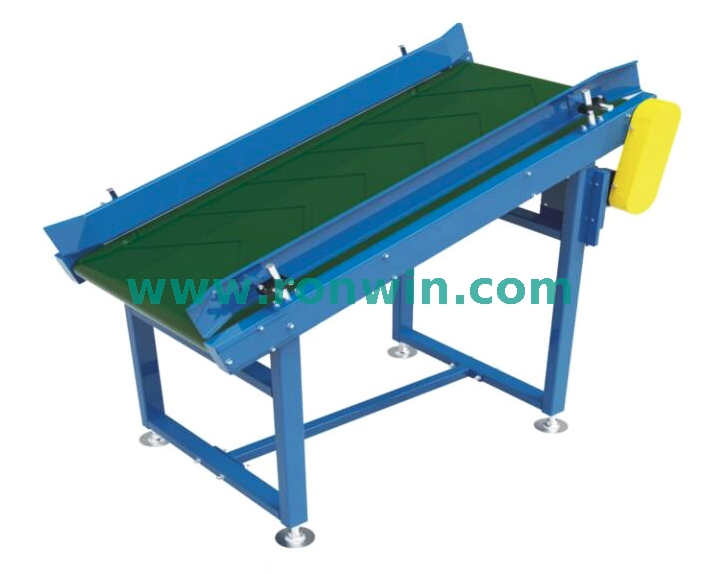
Best for lightweight to medium-weight items.
Variations include PVC belts, PVK belts, and food-grade belts.
Smooth operation reduces product damage.
Ideal for packaging, food processing, and electronics handling.
| Belt Type | Typical Use | Key Advantage |
|---|---|---|
| PVC | Light/medium goods | Durable and low maintenance |
| PVK | Bulk items | Flexible and strong |
| Food-grade | Food & beverage | Hygienic and easy to clean |
Flexible roller conveyors adapt to curved paths or changing layouts.
Rigid roller conveyors support high-volume, heavy-duty operations.
They reduce manual lifting and improve throughput.
Common in warehouses, distribution centers, and manufacturing facilities.
Perfect for heavy or abrasive materials.
Examples: automotive components, metal shavings, large industrial parts.
Durable construction ensures long-lasting performance.
Can integrate with robotic arms for automated handling.
Streamline truck loading and unloading processes.
Extendable design reaches into trailers or containers.
Speeds up operations and reduces manual labor.
Widely used in logistics, e-commerce, and distribution centers.
| Conveyor Type | Best For | Operational Benefit |
|---|---|---|
| Belt Conveyors | Light-medium items | Smooth, hygienic transport |
| Roller Conveyors | Bulk and heavy loads | Adaptable and high-capacity |
| Chain Conveyors | Heavy or abrasive materials | Durable, long-lasting |
| Telescopic Belt | Loading/unloading | Fast, flexible handling |
Customized conveyor solutions shine when tailored to the unique demands of each industry. They help businesses handle products efficiently while meeting strict safety, hygiene, or operational standards. Using industry-specific conveyors ensures smooth workflow, reduced manual handling, and compliance across all sectors.
In manufacturing, heavy-duty custom conveyor systems move large, bulky components efficiently, supporting continuous production without delays. They integrate seamlessly with robotic arms, automated assembly lines, and material handling equipment, ensuring smooth workflow and reducing manual labor. For example, metal stamping plants often rely on bespoke manufacturing conveyors to handle heavy parts safely, improve throughput, and maintain operational reliability in demanding industrial environments.
The food and beverage industry depends on sanitary customized conveyors built from easy-to-clean, corrosion-resistant materials. These systems are designed to meet strict hygiene standards such as HACCP, ensuring food safety and quality. Open-frame designs and quick-release belts allow thorough washdowns, while smooth surfaces reduce product damage. They are ideal for bakery, dairy, beverage, or packaged food production lines requiring consistent, contamination-free transport.
High-speed custom conveyor solutions help e-commerce and distribution centers manage a wide variety of package sizes efficiently. Automated systems increase throughput during peak season, while smart sortation, sensors, and programmable controls minimize mispicks and delays. Fulfillment centers handling thousands of parcels daily benefit from custom e-commerce conveyors designed for speed, accuracy, and adaptability in fast-paced logistics operations.
Pharmaceutical production requires cleanroom-compliant industry-specific conveyors to control contamination and maintain product integrity. Traceability features, such as barcode scanners and sensor monitoring, ensure every product can be tracked through processes. Smooth surfaces, enclosed drives, and stainless steel construction support GMP standards, while customized designs allow integration with automated filling and packaging machines to maintain sterility and efficiency.
Automotive plants use chain-driven live roller custom conveyors to move heavy parts efficiently across assembly and packaging lines. Ergonomic designs simplify worker handling and reduce fatigue. Flexible layouts accommodate large components, robotic integration, and multi-stage assembly processes. For example, car assembly lines moving engines, doors, and chassis parts rely on custom automotive conveyors to maintain high-speed, safe, and reliable material flow.
| Industry | Conveyor Features | Key Benefits |
|---|---|---|
| Manufacturing | Heavy-duty, robotic integration | Reduced labor, higher throughput |
| Food & Beverage | Sanitary belts, HACCP-compliant | Hygiene, product safety |
| E-Commerce & Distribution | Automated sortation, high-speed | Accuracy, peak efficiency |
| Pharmaceuticals | Cleanroom-compliant, traceable | Contamination control, compliance |
| Automotive | Chain-driven, ergonomic | Smooth assembly, safe handling |
Investing in customized conveyor solutions can redefine efficiency and safety across your operations. Longwei Automation’s expertise ensures each system matches your workflow, handles products carefully, and adapts to your facility’s layout. From scaling for growth to integrating smart automation, these conveyors are built to perform today and evolve with tomorrow.
Don’t settle for generic systems—let your business run smarter, faster, and safer with Longwei Automation’s tailored conveyor solutions. Explore how a customized approach can streamline your processes and unlock real operational value.
Industries such as manufacturing, food & beverage, e-commerce, pharmaceuticals, and automotive gain the most from custom conveyors due to specific operational or regulatory requirements.
Yes, they incorporate industry-specific safety features, reduce manual handling, and lower the risk of workplace injuries while supporting compliance standards.
They are designed to fit existing facility layouts, including vertical or multi-level configurations, and can adapt to irregular floor plans for maximum efficiency.
Absolutely. Modular designs allow expansion, and new technologies like robotics or IoT can be integrated easily as production demands evolve.
Optimized engineering reduces wear, components last longer, and layouts allow easy access for inspections, minimizing downtime and repair costs.


