 |
CR100
RONWIN
The Gravity Curve Roller Conveyor is a type of gravity conveyor. Its core characteristics are.
No Power Drive: The conveyor itself has no power source like a motor.
Utilizes Gravity: It relies on the weight of the items being conveyed and a certain incline angle, allowing items to slide down naturally on the rollers by gravity.
Curved Design: Its frame and roller arrangement form a specific arc (commonly 90° or 45°), specifically designed to connect two straight conveyor sections and change the direction of conveyance.
The working principle is very simple: Items are pushed from the higher end of a
straight conveyor into the curve section. Under the force of gravity, the items follow the curved path formed by the rollers, smoothly change direction, and slide towards the lower end outlet, entering the next section of the conveyor line.
Curved Frame: This is the skeleton of the equipment, usually made of high-strength steel, precisely bent into the required arc (e.g., 90°, 45°, 180°) to ensure a smooth turning path.
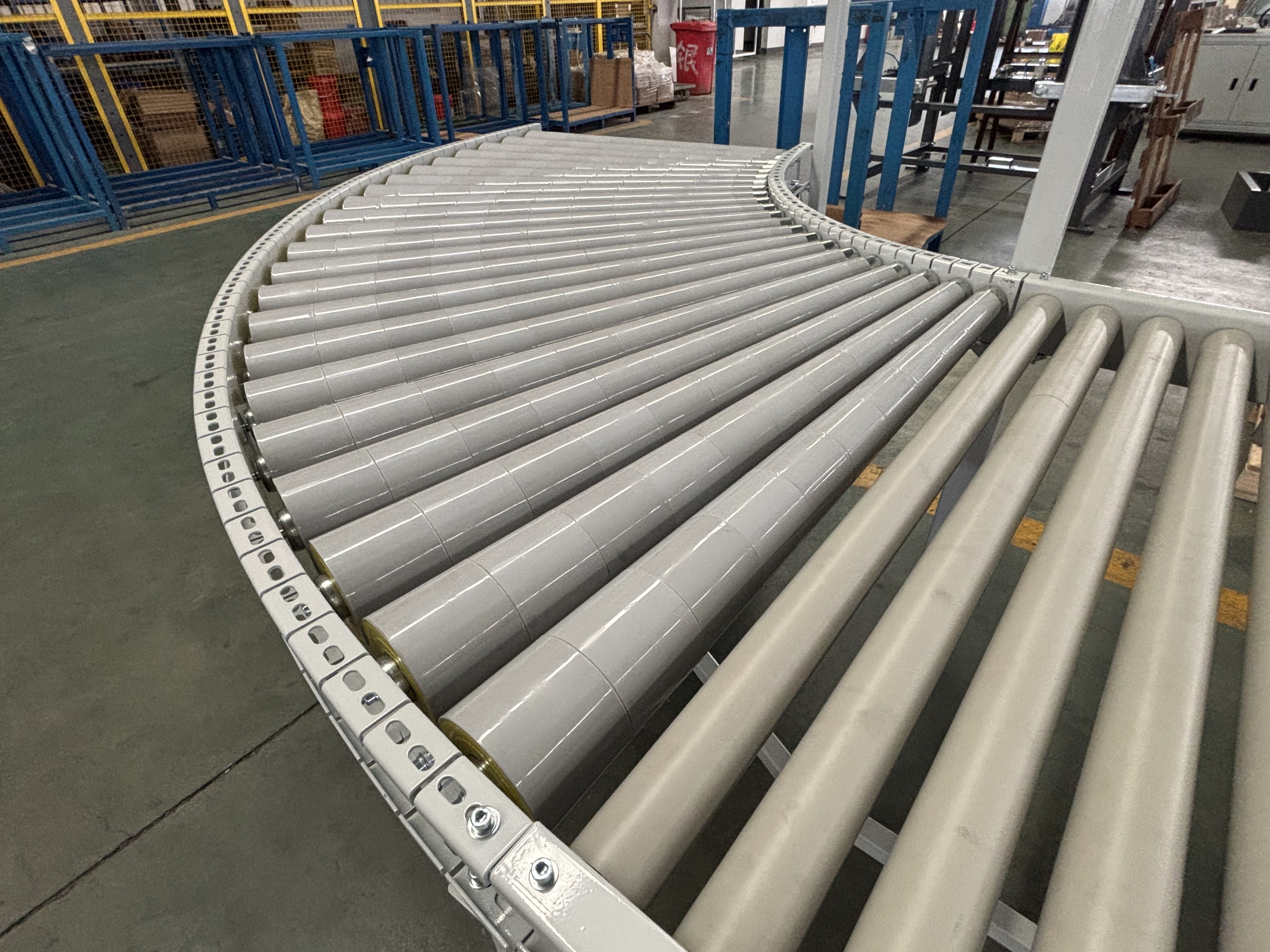
Rollers: These are the core load-bearing and guiding components. The rollers used in the curve section are typically Tapered Rollers or straight rollers arranged in a special pattern.
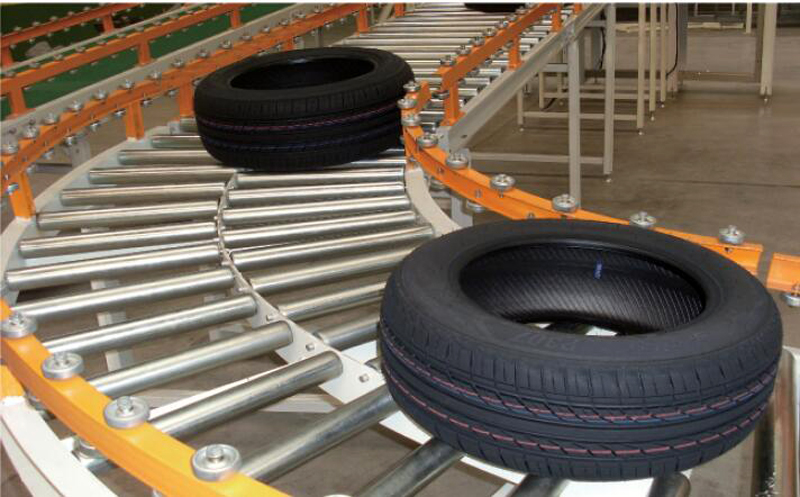
Tapered Rollers: This is the most ideal and common solution. The diameter of the roller gradually increases from the inside (closer to the center of the arc) to the outside. This design ensures that during the turn, the linear speeds of the inner and outer sides of the roller are different (the outer path is longer, requiring a higher linear speed; the inner path is shorter, requiring a lower linear speed). This allows the goods to turn smoothly and steadily along the curve's centerline, effectively preventing jamming, congestion, or severe friction against the guardrails.
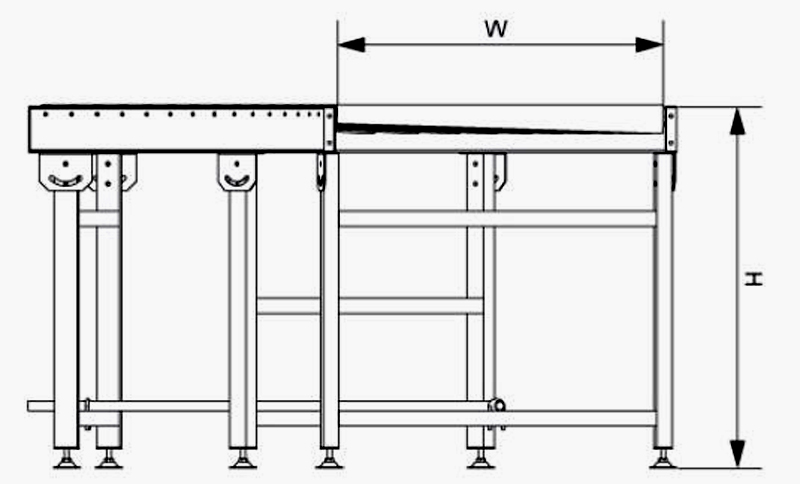
Stands & Leveling Feet: Used to support the entire curved frame, they are usually height-adjustable to ensure smooth connection with the preceding and following conveyor sections and to create the necessary incline.
Guardrails: Installed on both the inside and outside of the frame, they are crucial. Their role is to prevent items from derailing during the turn due to centrifugal force. The guardrail surfaces are often fitted with wear strips to reduce friction and noise.
Energy Efficient & Eco-Friendly: Operates entirely on gravity, consuming no electrical power or other energy sources, resulting in very low operating costs.
Simple Structure, Easy Maintenance: Lacks complex power and control systems, has fewer parts, low failure rate. Daily maintenance usually only involves keeping the rollers clean and rotating freely.
Smooth & Quiet Operation: A well-designed gravity curve roller conveyor enables smooth turning of goods, with minimal impact and low noise.
High Cost-Effectiveness: The initial investment cost is much lower than powered curve conveyors (such as curved belt conveyors, powered roller curves).
Strong Flexibility: Can be easily combined with various straight gravity or powered conveyors to form complex conveyor networks.
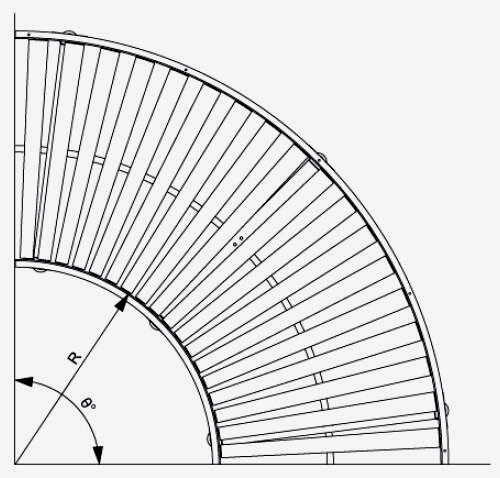
Model no. -rack inner width(W)-rack height(H)-turning radius(R)-turning angle(°)
Order no. example(unit mm): CR100-500-700-900-90
| Specifications (unit: mm) | |
|---|---|
| roller diameter | 50 (small end) |
| turning inside radius | suggest 900 |
| turning angle | 45°, 60°, 90° |
| roller included angle | ≤6° |
| rack inner width | 500, 600, 700, 800, 900, 1000, 1500 |
| rack height | 300-1500 |
| rack material | steel folded-plate |
| support leg material | rectagular steel tube |
| conveyor color | plastic spary, color is on customer's request |
Note: Straight roller, straight roller with tapered sleeve and tapered roller is optional.
Gravity curve roller conveyors are widely used in situations requiring directional changes for boxes, cartons, trays, and other items, for example:
Warehousing & Logistics Centers: Connecting different conveyor lines in sorting areas, loading/unloading areas.
Packaging Production Lines: Transferring products from one production line to another.
Express Parcel Sorting Centers: Guiding the path of packages.
Supermarket Distribution Centers: Conveying food, general merchandise.
Manufacturing Industries: Transferring components or finished products between assembly lines.
Despite their clear advantages, their limitations must also be considered when selecting:
Requirements for the Goods:
Flat Bottom: Goods must have a hard, flat bottom surface, such as cardboard boxes, plastic totes, wooden pallets. Soft bags or items with irregular bottom surfaces are not suitable.
Moderate Weight: Goods need sufficient weight to overcome the rolling friction of the rollers, but cannot be too heavy, otherwise, the sliding speed may become too high and difficult to control, or require excessively strong rollers.
Requires Incline: The entire conveyor system must have a sufficient slope; otherwise, goods will stall.
Speed Control: The speed in gravity conveyors varies with weight and slope, making precise control difficult. At stations requiring precise positioning, it's necessary to use stoppers or subsequent powered conveyor sections.
Curve Radius Selection: Selecting the appropriate curve radius based on the size of the goods is crucial. Too small a radius will cause large goods to jam or collide with the guardrails during the turn.
The Gravity Curve Roller Conveyor is an economical, efficient, and reliable material handling turning solution. It perfectly utilizes physical principles to achieve automated material flow under specific conditions. When planning a conveyor system, if your goods are suitable and site conditions allow, it is often the preferred solution for implementing turning functions.


